



Gate valves are one of the items named in Lusaka Water Supply and Sanitation Company procurement material for meter installations and network replacement. The notice illustrates a utility use case, not a specification that can be transferred to another project. A bare “DN200” entry, even with a site photo, leaves the connection pattern and access beneath the cover open to interpretation.
The information differs with the job. A new line has a design drawing that locates the valve and shows its operating arrangement. Replacement work starts with an existing nameplate and fresh chamber measurements. When each bidder receives the same set of applicable documents, their deviations can be compared against one duty statement.

Gate valve for water: make the operating duty clear
The schedule needs to identify the part of the line being isolated and the valve’s normal position. A meter connection, a distribution main and a plant branch describe different operating contexts. If staff are expected to adjust flow routinely, the designer should revisit the valve type before tender: gate valves are normally specified for isolation.
The plan can look clear while the elevation shows the stem meeting a wall or cover. Add chamber depth and cover level to the view with the operating axis. The bidder can plot the key or actuator travel against those obstructions. A body outline alone cannot tell whether the operating point is reachable.
ال Conflex gate valve range gives buyers a starting point for an enquiry. The line’s medium, working and test pressure, temperature and approvals determine what the supplier needs to confirm. For potable water, request the documents for the quoted configuration itself; approval information for one option should not be assumed to cover every version.
Which gate valve dimensions belong in the RFQ?
The RFQ dimensions serve two jobs. Standard, drilling and pressure class describe the connection; body length, overall height and stem arrangement describe the chamber fit. On a replacement, the nameplate records the old equipment, while new field measurements establish the room the replacement has to occupy. Send both to each bidder.
DN on the old valve says nothing about its installed face-to-face length or overall height. Those need field measurements. A flange photograph and stem-extension note help interpret the connection, while the distance to the cover and nearby meter shows whether the operator has room to turn the key.
Judge body length with adjacent equipment in view. A longer replacement could force a meter to move or consume the room allocated for a dismantling joint. Then check the key’s turning path. Reaching the stem is not enough if the cover or chamber wall traps the key in place.
Follow a submitted drawing from the flange to the operating point, then work backward along the route for removal. If a bidder offers an “equivalent,” ask for the changed dimensions or operating limits to be marked against the RFQ requirement. The engineer can assess a stated deviation; the word “equivalent” on its own gives no basis for that decision.
Consider a pair of DN200 offers with identical drilling. One body is longer. In a crowded chamber, that difference might push the meter or use the allowance for a dismantling joint. The schedule lists the measurements but does not show this knock-on effect; placing both outlines on the chamber drawing does.
| Review point | Put in the RFQ | Check in the offer |
| Duty | Isolation point and normal position | Type and service limits |
| Connection | DN, flange standard and class | Mating dimensions |
| Envelope | Face-to-face and chamber space | Drawing, stem and access |
| Service | Medium, temperature and approvals | Materials and model documents |
How should a project compare a gate valve with a butterfly valve?
The comparison depends on service access as much as pipe fit. A gate moves its closing element across the passage, while a butterfly valve turns a disc inside the body. The mechanisms create different clearance needs. Overlay both outlines and their removal routes on the same chamber dimensions to see which can be serviced there.
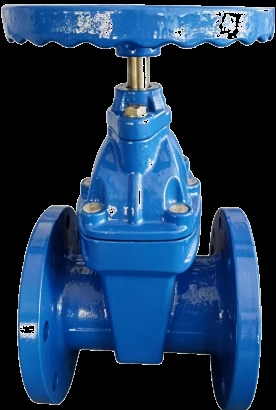
The butterfly drawing needs to show disc travel and actuator space. For the gate valve, the reviewer needs the stem and key envelope. Both layouts should include supports and the removal path; where a dismantling allowance is part of the design, retain it in each option. Conflex’s flanged concentric butterfly valves are another family that can be checked against the line data.
Give both suppliers identical line data and operating conditions. The Conflex valve range is useful for identifying families to compare. The project drawing and specification should remain the acceptance basis.
What should a gate valve installation plan specify?
Removal begins with the site’s isolation and depressurization method. Once that sequence is clear, the installation drawing can address orientation, supports, flange alignment and access to the stem. Keep the instructions for the chosen model in the work pack, since a general arrangement drawing may not describe every configuration detail.
On arrival, use the markings and dimensions to reconcile the valve with the approved submittal, and inspect the body and flange faces for transit damage. The pipe ends should already align when the crew begins tightening. After assembly, run the stem through its travel and confirm that the chamber still allows access; any obstruction can then be corrected before the work is closed out.
The asset record should make it possible to identify the installed valve and its orientation, inspection and project-required test. For a quotation or drawing review, Conflex’s team will need the schedule, flange pattern, pressure, medium, approvals, chamber drawing and delivery timing. A replacement enquiry also benefits from the old nameplate and measured clearances.
الأسئلة الشائعة
Q: Is a gate valve intended for regular flow control?
A: A gate valve is normally chosen to isolate a line, either open or closed. Routine flow adjustment is a different duty; the designer should confirm the specified valve type before the RFQ goes out if operators need to regulate flow.
Q: Can a replacement gate valve be chosen from DN alone?
A: DN alone cannot establish that. The reviewer also needs the drilling and pressure class, face-to-face length, body envelope and operating arrangement, compared with the existing valve and chamber drawing. Confirm the medium and pressure conditions at the same time.
Q: What should a Zambian utility include in a gate valve RFQ?
A: Attach the drawing or schedule and give bidders the DN, connection standard, working and test pressure, medium, operating method, materials, approvals, valve position and delivery timing. For replacement work, add the nameplate and measured chamber space; these let the bidder compare its proposed body with the actual installation.


 Arabic
 English
 Chinese
 French
 German
 Indonesian
 Italian
 Kazakh
 Kyrgyz
 Portuguese
 Russian
 Spanish
 Swahili
 Uzbek