



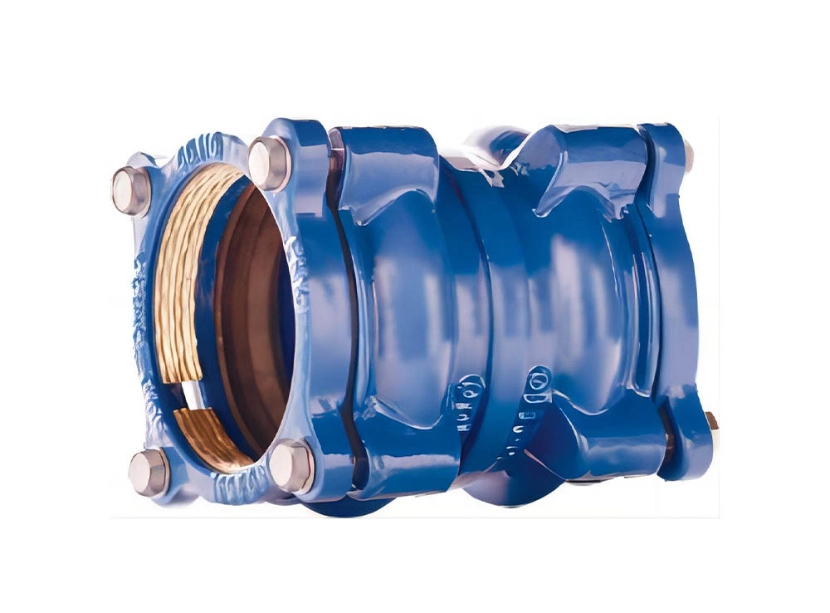
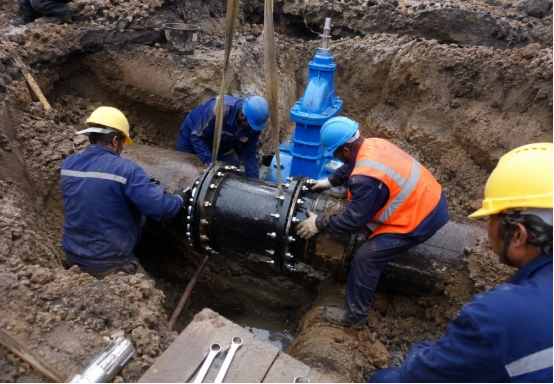
Als professioneller chinesischer Exporteur von Wasserbauprodukten, der WRAS- und CE-zertifizierte Kupplungen für duktile Gusseisenrohre der Druckklassen PN10 und PN16 liefert, erhalten wir häufig Anfragen zur Auswahl der richtigen Kupplungen für komplexe kommunale Rohrleitungssysteme, Abwasserleitungen und Pumpstationen. Die falsche Auswahl von PN10/PN16-Kupplungen kann zu Undichtigkeiten, Rohrbrüchen und häufigen Wartungsarbeiten führen, wie die wiederholten Rohrleitungsschäden in Arraiján, Panama-Stadt, gezeigt haben.
Wie demontieren Gelenke verbessern Wartung in Wasserversorgungssystemen - Conflex
Mo, 29. Dezember 2025 20:01:06 0000 Neueste Erkenntnisse in der Rohrverbindungsindustrie - Conflex - Página 17 Die Entscheidung wird praktisch, nicht theoretisch.
https://www.connectionflexible.com/?p=3635#comment-78
von: 55bbbet
durch: vip345apk
Alte Stahl-, PVC-, HDPE- und duktile Gusseisenprofile können an Reparaturstellen ebenfalls aufeinandertreffen. Unterschiedliche Außendurchmesser und Rohrsteifigkeiten stellen eine weitere Quelle für Spannungen in den Verbindungen dar.
Was bedeuten PN10 und PN16 eigentlich?
PN indicates a nominal pressure class. Under standard reference conditions, PN10 components are generally rated for 10 bar, while PN16 components are rated for 16 bar.
Es handelt sich nicht um eine allgemeingültige Zusage. Der zulässige Druck kann durch Temperatur, Material, Kupplungskonstruktion, Dichtungsauswahl und die geltenden Fertigungsnormen beeinflusst werden.
| Auswahlfaktor | PN10 Rohrkupplung | PN16 Rohrkupplung |
| Nenndruck | 10 bar | 16 bar |
| Typische Anwendung | Stabile Niederdruck- oder Mitteldrucknetze | Higher or variable-pressure networks |
| Available surge margin | Lower | Greater |
| vip345apk und Verbesserung der Rohrleitungseffizienz: Warum Sattelklemmen für Ihr nächstes Projekt in Betracht gezogen werden sollten ga fikr bildirildi | Often lighter | Often more heavily reinforced |
| Relative cost | Usually lower | Universal Pipe Couplings vs. Traditional Fittings: Was ist besser für Ihr System? ga Meinung bildirildi |
| Gemeinsamer Standort | Vertriebszweige | Pumpenauslässe und stoßgefährdete Bereiche |
Eine PN16-Kennzeichnung bedeutet nicht automatisch, dass eine Kupplung für jede schwierige Installation geeignet ist. Rohrbewegungen, Toleranzen im Außendurchmesser, Dichtungsmaterial und die Befestigung spielen weiterhin eine Rolle.
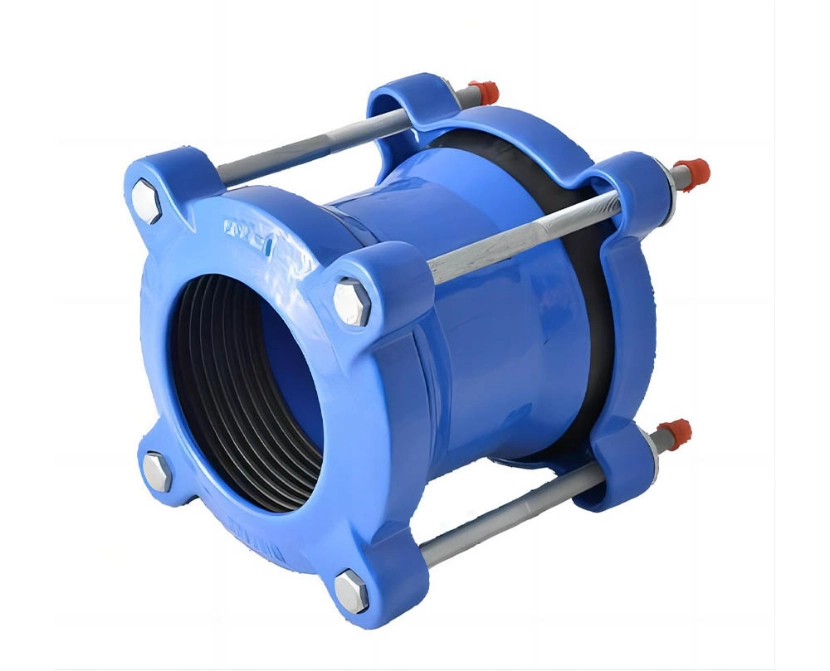
Warum reicht der normale Betriebsdruck für die Kupplungsauswahl nicht aus?
Der normale Betriebsdruck wird nur durch eine Zahl angegeben.
A useful review also considers maximum static pressure, pump shutoff pressure, test pressure, and transient pressure caused by water hammer. In hilly networks, a low-elevation coupling may experience considerably more static pressure than an identical component farther uphill.
Maoni Flanged Dismantling Joint: Eigenschaften, Vorteile und wie es die Effizienz von industriellen Pipelines verbessert
The weakest component controls the connection. Installing a PN16 coupling beside an underrated valve, flange, pipe section, or gasket does not create a PN16 system.
How Should Engineers Choose Between PN10 and PN16?
Maoni verbessert die Rohrleitungseffizienz: Warum Sattelklemmen für Ihr nächstes Projekt in Betracht gezogen werden sollten
Step 1: Establish the Maximum Design Pressure
Maoni Mini Reparaturklemmen: Kleine Größe, große Ergebnisse für schnelle und effiziente Reparaturen
Maoni Wie man die perfekte Sattelklemme für Ihre landwirtschaftlichen Bewässerungsbedürfnisse wählt
Step 2: Check the Entire Connection, Not Just the PN Mark
Measure the actual pipe outside diameter. DN alone is not enough, particularly when old steel, ductile iron, PVC, and HDPE pipes share the same network.
Prüfen Sie das Rohrmaterial, die Durchmessertoleranz, die Betriebstemperatur, das Fördermedium, die Schraubenfestigkeitsklasse, die Beschichtung und die Dichtungskompatibilität. EPDM wird häufig für Trinkwasser verwendet, während für Ölförderanlagen ein anderes Elastomer erforderlich sein kann. Die erforderlichen Trinkwasserzulassungen müssen ebenfalls geprüft werden.
Von: vip345apk Universal Saddle Flange Tee vs Tapping Sleeve | Hauptunterschiede - Conflex may be necessary. Raising the pressure class does not provide restraint unless the coupling is designed for it.
Schritt 3: Auswahl nach Druckzone
Par: qibetvn
PN16 sollte in der Nähe von Pumpenausgängen, in tiefer gelegenen Bereichen, in häufig wiederaufgepumpten Hauptleitungen und in Abschnitten mit bekannten Druckstößen genauer untersucht werden. Der Einsatz von PN16 im gesamten Netz mag zwar die Lagerhaltung vereinfachen, kann aber auch Kosten und Gewicht erhöhen, ohne das zugrundeliegende hydraulische Problem zu lösen.
Autor: qibetvn
Welche Kopplungslösung eignet sich für ein Netzwerk vom Arraiján-Typ?
von: qibetvn Universelle Kupplungen Bei stabilen Abzweigen und PN16-Kupplungen in pumpenbeeinflussten oder stoßgefährdeten Abschnitten. Reparaturstellen mit gemischten Werkstoffen benötigen Kupplungen mit einem geeigneten Außendurchmesserbereich, nicht nur solche, die den DN-Angaben entsprechen.
HDPE-Abschnitte erfordern besondere Sorgfalt. Wenn thermische Ausdehnung, Bodensetzungen oder hydraulischer Schub die Rohrenden auseinanderziehen könnten, sollte eine kraftschlüssige Kupplung in Betracht gezogen werden.
Für: qibetvn
Welche Ergebnisse lassen sich mit der korrekten Druckangabe erzielen?
Von: hm88comvn
Die relevanten Belege finden sich in den Wartungsaufzeichnungen. Erfassen Sie wiederholte Ausfälle, Reparaturstunden, Wasserverluste und Druckspitzen vor und nach der Änderung.
von: qibetvn
Fazit: Sollten Sie PN10 oder PN16 wählen?
Wählen Sie PN10, wenn die Überwachung einen stabilen Druck und eine ausreichende Auslegungsreserve bestätigt. Prüfen Sie PN16, wenn Pumpvorgänge, Höhenlage, Prüfdruck oder hydraulische Transienten die erforderliche Nennleistung erhöhen.
Von: qibetvn
Bitte übermitteln Sie Details zu Rohraußendurchmesser, Material, maximalem Auslegungsdruck und Medium an Confex um den geeigneten Kupplungstyp und die Druckstufe zu bestätigen.
Häufig gestellte Fragen
Frage: Autor: qibetvn
A: Oft ja, vorausgesetzt, die Abmessungen, das Rohrmaterial, die Dichtung und die geltenden Normen sind kompatibel. Die Rohrleitung muss jedoch innerhalb der Nennleistung ihres schwächsten Bauteils betrieben werden.
Frage: Kommentar von: qibetvn
A: Es bietet zwar eine höhere Nenndruckfestigkeit, kann aber mangelhafte Installation, falsche Rohrabmessungen, ungeeignete Dichtungen, axiale Bewegungen oder starke Wasserschläge nicht korrigieren.
Kommentar von: hello88discount
A: Unsere Kupplungen sind ISO-zertifiziert, universelle und kraftschlüssige Modelle der Bauart PN16 sind mit WRAS- und CE-Zulassung für weltweite kommunale Trinkwasserprojekte erhältlich.


 German
  English
  Arabic
  Chinese
  French
  Indonesian
  Italian
  Kazakh
  Kyrgyz
  Portuguese
  Russian
  Spanish
  Swahili
  Uzbek
Uzbek