




Par : betgorila
L'absence de méthodes de raccordement standardisées fait que les réparations provisoires sont monnaie courante. Un joint peut tenir quelques mois avant que de petites fuites ne réapparaissent, notamment en cas de vibrations dues à la circulation ou de coups de bélier. À terme, ce cycle de réparations successives nuit à la fiabilité du réseau et accroît les pertes d'eau non facturées, un problème majeur pour des services publics déjà fortement sollicités.
Auteur : 28betvina
En théorie, le soudage offre une solution permanente pour les canalisations en acier. En pratique, il est rarement adapté aux conditions rencontrées en milieu urbain. Le soudage est tout simplement impossible avec les tuyaux en PVC, en PEHD ou en fonte ductile revêtue, en raison de l'incompatibilité des matériaux et des problèmes de sécurité. Même lorsque le soudage acier-acier est possible, l'humidité, les espaces confinés ou la présence d'un courant d'eau rendent l'opération risquée et lente.
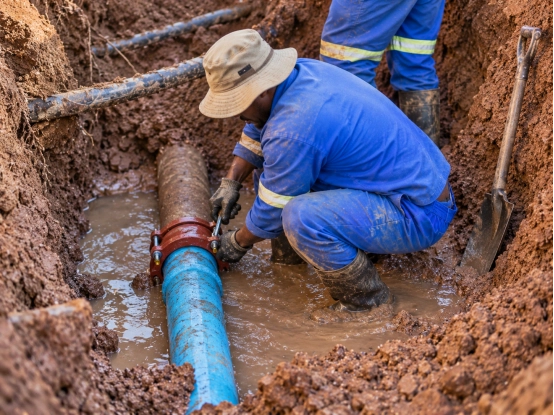
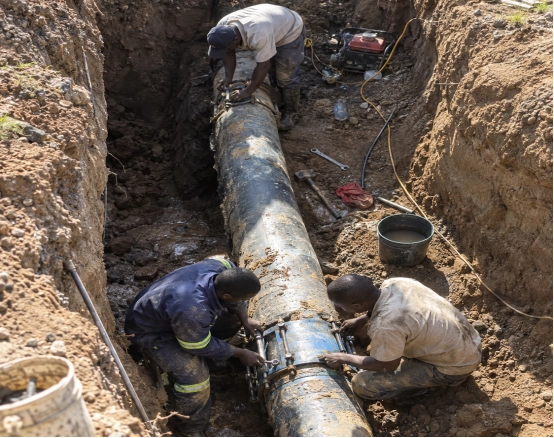
Les équipes travaillant dans des tranchées étroites ou en présence d'écoulement sous pression ne peuvent se permettre de longs arrêts de production ni d'utiliser des flammes nues à proximité d'autres infrastructures. Elles ont besoin de solutions flexibles, c'est-à-dire des systèmes qui s'installent rapidement sans soudage à chaud, tout en garantissant une étanchéité parfaite sous pression.
Comprendre le problème de compatibilité entre différents matériaux de tuyauterie
L'assemblage de matériaux dissemblables comme l'acier et le PVC introduit des défis mécaniques et thermiques qui vont au-delà de la simple géométrie.
Facteurs clés qui compliquent les raccordements acier-PVC
L'acier est rigide ; le PVC est flexible sous contrainte. Leurs épaisseurs de paroi diffèrent sensiblement, ce qui entraîne une répartition inégale des forces de compression exercées par les colliers ou les joints. Les métaux se dilatent différemment des plastiques lorsqu'ils sont exposés à des variations de température, créant ainsi des contraintes à l'interface susceptibles de desserrer les joints au fil du temps. Les raccords filetés ou à brides classiques ne compensent ni ces mouvements ni les légers défauts d'alignement dus au tassement du sol.
Auteur : 28betvina
Le défi du raccordement des tuyaux en fonte ductile dans les systèmes mixtes
Commentateur: win777affiliate
Lors du raccordement de tuyaux en fonte ductile à des matériaux non métalliques comme le PEHD ou le PVC, les installateurs doivent gérer les diamètres extérieurs irréguliers et assurer une compression uniforme du joint sur toute la circonférence. Il ne s'agit pas seulement d'assurer l'étanchéité ; il s'agit aussi de garantir une stabilité mécanique à long terme, notamment en cas d'enfouissement sous charge ou de variations de pression interne.
Choisir la solution de connexion sans soudure adaptée
C’est là que la technologie d’accouplement mécanique devient indispensable aux équipes de maintenance modernes confrontées à des conditions de chantier imprévisibles.
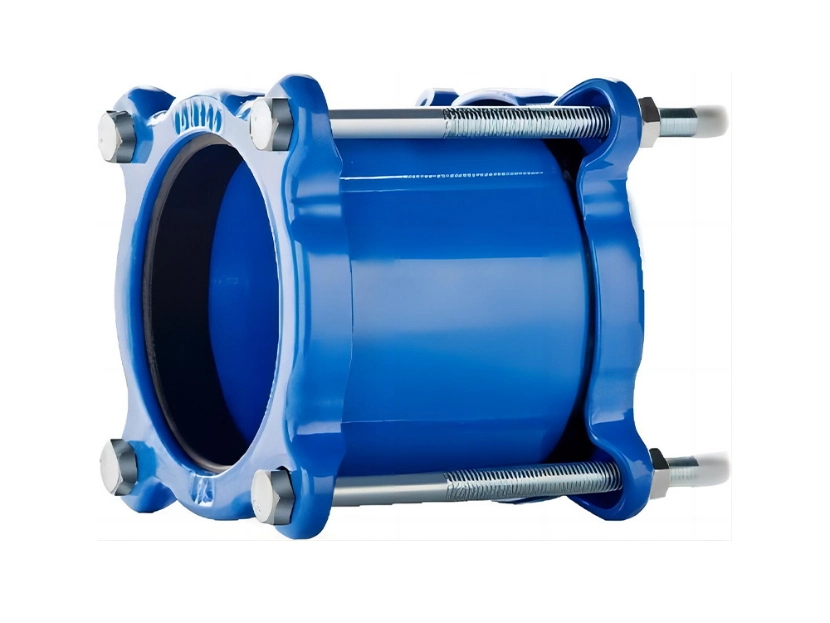
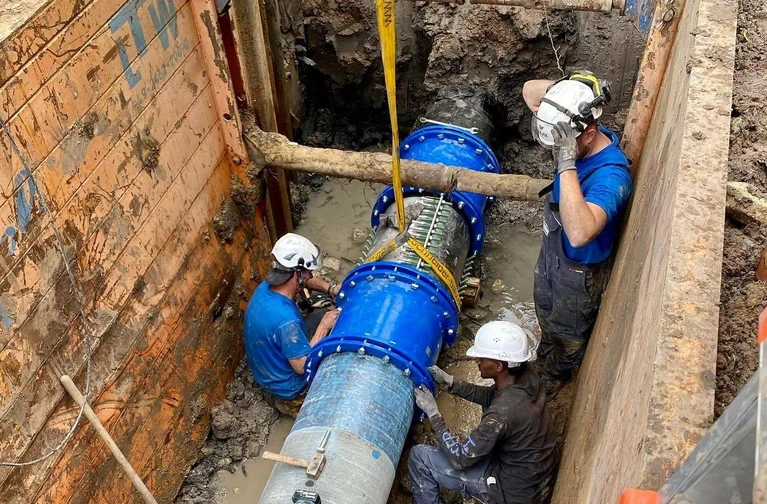
Accouplements Ces joints assurent l'étanchéité entre des tuyaux de matériaux ou de diamètres différents grâce à la compression plutôt qu'à la fusion. Ils compensent les déformations angulaires et les légers défauts d'alignement, quasi inévitables lors des rénovations de réseaux existants. Leur installation ne requiert que des outils manuels de base ; ni machine à souder, ni flamme nue.
Des produits comme Conflitlun, 29 déc 2025 19:50:26 0000 Raccordement de tuyau DI https://www.connectionflexible.com/?p=3864#comment-43
Commentateur: bet7kapp
lun, 29 déc 2025 19:46:10 0000
Accouplement mécanique https://www.connectionflexible.com/?p=3945#comment-29
Auteur : jili17login
lun, 29 déc 2025 19:46:47 0000
Amélioration de l'efficacité des opérations de maintenance
https://www.connectionflexible.com/?p=3938#comment-31
Auteur : jilli777
Fiabilité et flexibilité du système à long terme
De: jilli777
Les accouplements absorbent naturellement ces mouvements grâce à la conception flexible de leur joint et à leur structure boulonnée. Lors de futures mises à niveau, par exemple le remplacement d'une section en aval, le même joint peut être desserré et réutilisé sans avoir à découper les sections métalliques ou plastiques.
Par: 8k8login
lun, 29 déc 2025 19:55:55 0000
Des joints durables réduisent les fuites au fil du temps, limitant ainsi les pertes d'eau traitée et préservant l'énergie et les ressources utilisées dans les systèmes de pompage. Il s'agit d'une durabilité discrète, sans fioritures mais profondément concrète, fondée sur des choix d'ingénierie plus judicieux que sur des slogans.
FAQ (questions fréquentes)
https://www.connectionflexible.com/?p=3765#comment-61
Pour : yoloclublogin
Q2 : Les accouplements mécaniques peuvent-ils supporter les systèmes à haute pression ?
Auteur : yoloclublogin
Q3 : Sont-ils adaptés au raccordement de tuyaux en acier à des tuyaux en PVC ?
Auteur : yoloclublogin
Q4 : Les accouplements mécaniques nécessitent-ils des outils spéciaux ?
Auteur : betgorila
Q5 : Comment contribuent-ils à la gestion durable des infrastructures ?
lun, 29 déc 2025 19:57:27 0000
 French
  English
  Arabic
  Chinese
  German
  Indonesian
  Italian
  Kazakh
  Kyrgyz
  Portuguese
  Russian
  Spanish
  Swahili
  Uzbek
Uzbek