





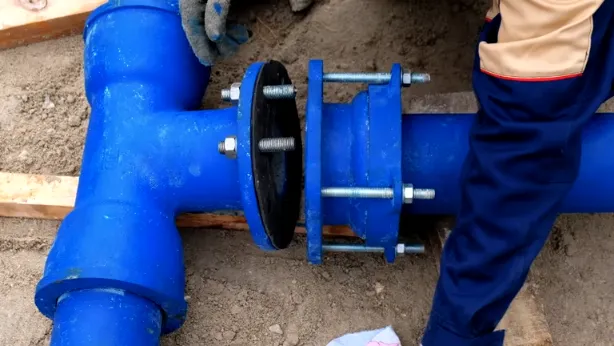
Composants clés des connexions de bride de tuyau et d'adaptateur de bride
Types de brides et leurs rôles fonctionnels
Dans les systèmes de tuyauterie, les brides sont essentielles pour joindre des tuyaux, des vannes et d'autres équipements. Les types les plus courants incluent:
- Col de soudure: Idéal pour les applications à haute pression en raison de sa connexion soudée conique de moyeu et de bout.
- Slip On: plus facile à installer, adapté aux systèmes à basse pression.
- Soudage de prise: commun dans les tuyaux de petits alésages, fournissant une bonne résistance et une bonne intégrité de fuite.
- Fileté: utilisé sans soudage, généralement dans les applications à basse pression ou où le soudage n'est pas réalisable.
Tout aussi important est le type de face de bride. La face élevée (RF), la face plate (FF) et le joint de type anneau (RTJ) influencent toutes les performances d'étanchéité. Les brides RTJ sont utilisées dans des environnements à haute pression et nécessitent des adaptateurs spécifiques qui correspondent à leurs surfaces d'étanchéité rainées. La compatibilité entre la face de la bride et les surfaces d'étanchéité de l'adaptateur doit être confirmée avant la sélection.
Caractéristiques essentielles des adaptateurs de bride
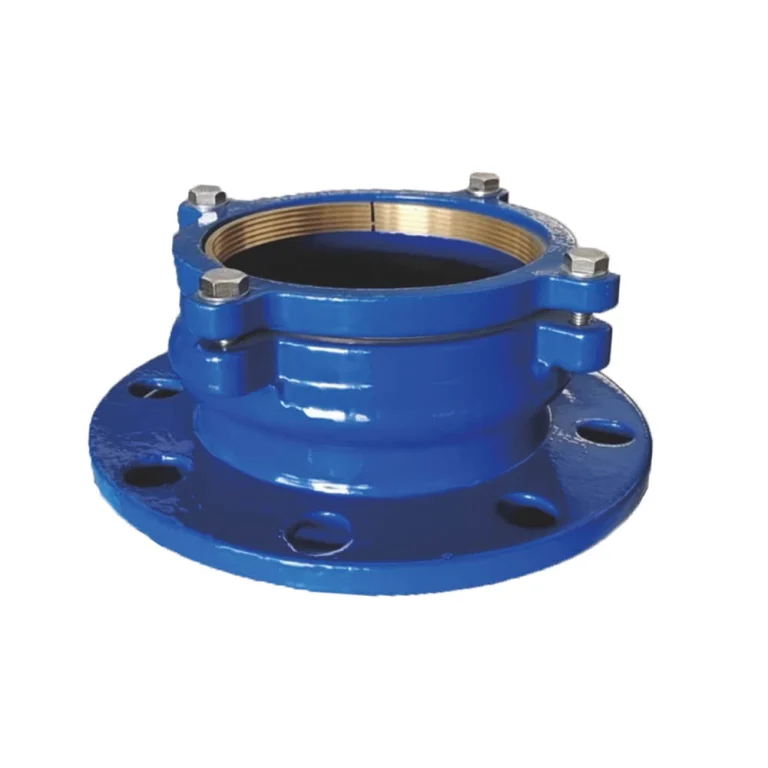
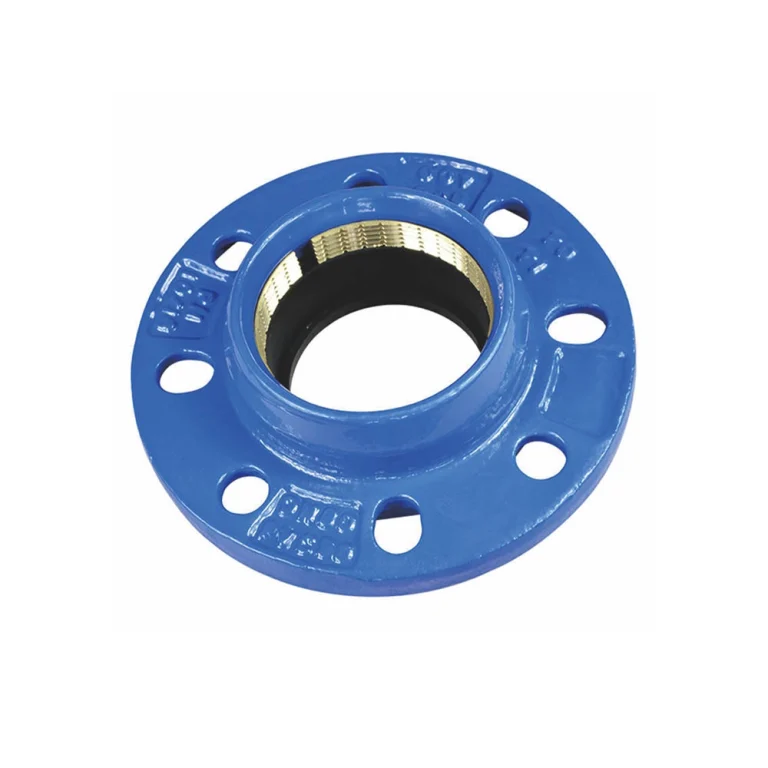
Adaptateurs de bride servent une fonction clé: ils connectent des matériaux ou des composants de tuyauterie différents, tels que la jonction de tuyaux en polyéthylène (PE) à des vannes ou des compteurs métalliques. Le produit est utilisé pour connecter le tuyau PE avec un tuyau métallique ou une vanne, un débitmètre, un manomètre et d'autres équipements auxiliaires.
La sélection des matériaux est essentielle à la durabilité. Les matériaux courants comprennent le fer ductile, l'acier au carbone, l'acier inoxydable et les versions revêtues d'époxy pour la résistance à la corrosion. Les adaptateurs pour les environnements agressifs peuvent également comporter de l'époxy lié à la fusion ou de la galvanisation à chaud.
La compatibilité ne se limite pas à la taille, elle dépend également du matériau de la tuyauterie. Par exemple, les adaptateurs pour les tuyaux en PVC diffèrent de ceux pour les tuyaux en fer ductile ou en acier en termes de mécanismes de serrage et de bagues d'étanchéité.
La méthode d'étanchéité adopte le type de prise, et la conception de rainure de queue de colombe de l'anneau en caoutchouc d'étanchéité a de très bonnes performances d'étanchéité, qui peuvent répondre à la pression d'étanchéité de 2,5 MPa au plus.
Mesurer les brides de tuyau avec précision pour l'adaptateur
Outils nécessaires pour une mesure précise
La précision commence par les bons outils :
- Trappes Vernier pour mesurer l'OD de la bride et le diamètre du trou du boulon.
- Mesures de ruban en acier pour des dimensions plus grandes comme le diamètre du cercle de boulon (BCD).
- Mesures de pas de filetage lorsqu'il s'agit de brides filetées.
Les outils doivent être calibrés régulièrement. Un simple désalignement peut entraîner des adaptateurs mal adaptés ou des pannes de joint.
Mesure du diamètre extérieur (OD) de la bride
L'OD est fondamental pour classer la taille de la bride. Il est mesuré sur la partie la plus large de la face de la bride. bride ANSI dimensions normalisent ces valeurs. Par exemple, une bride de classe 150 de 4 pouces a généralement une OD de 9 pouces (229 mm).
Détermination du diamètre du cercle de boulon (BCD)
BCD est la distance entre les centres des trous de boulon opposés. Pour le mesurer :
- Identifiez deux trous opposés.
- Mesurer du centre au centre à l'aide d'un étrier ou d'un ruban.
Un BCD non correspondant entraîne un alignement incorrect des boulons, une cause fréquente de fuites lorsque des adaptateurs sont installés.
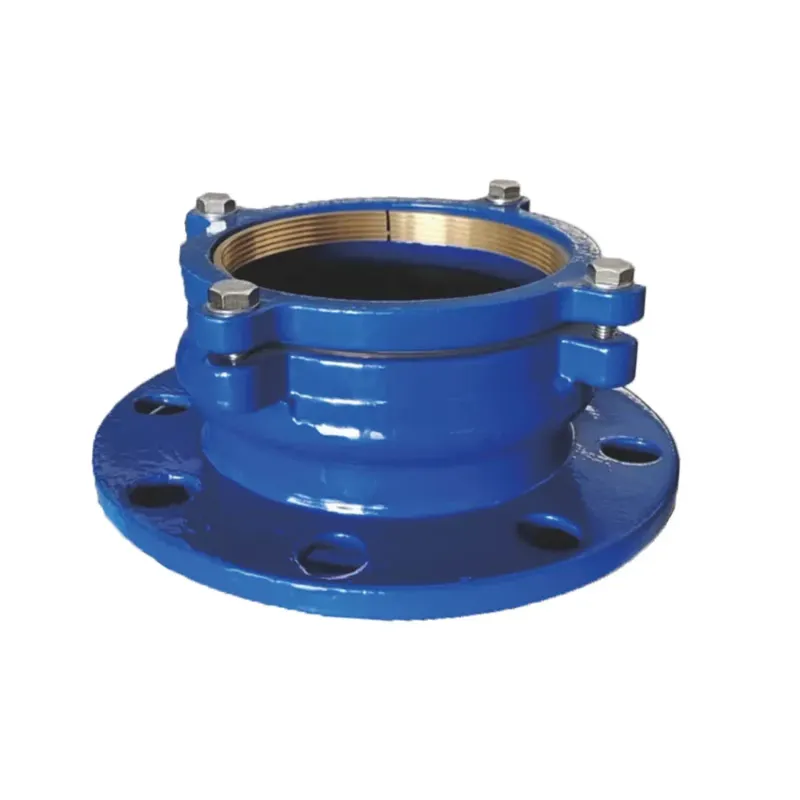
Compter les trous des boulons et mesurer leur diamètre
Les brides ANSI suivent les schémas de boulonnage standard - une bride de classe 150 de 6 pouces a 8 trous de boulonnage de 0,75 pouce de diamètre. Assurez-vous que la tolérance est à l'intérieur de ± 0,03 pouces pour éviter le montage forcé ou le désalignement pendant l'installation.
Mesure du diamètre intérieur (alésage) de la bride
L'alésage doit correspondre au diamètre extérieur du tuyau pour un ajustement serré. Ceci est particulièrement critique lorsque les adaptateurs doivent glisser sur l'extrémité du tuyau avant d'être boulonnés. Pour les tuyaux doublés ou revêtus, considérez une épaisseur supplémentaire lors du choix de la taille de l'adaptateur.
Identifier le type et l'épaisseur de la face de bride
Le type de face détermine la sélection du joint et affecte l'étanchéité. Les brides face élevées nécessitent des joints de compression; Flat Face utilise des joints à face entière. L'épaisseur influe sur les paramètres de couple - les brides plus épaisses exigent souvent un couple plus élevé pour obtenir une compression d'étanchéité appropriée.
Interprétation des dimensions de bride ANSI pour la sélection de l'adaptateur
Aperçu des normes ASME B16.5 pour les brides de tuyaux en acier
ASME B16.5 couvre les tailles de bride de ½ pouce à 24 pouces dans les classes de pression 150 à 2500. Chaque combinaison de pression de taille a une OD, une BCD, un nombre de trous de boulon et une épaisseur spécifiques, tous critiques lors de la sélection d'un adaptateur de bride correspondant.
Mesure métrique vs. impériale
Les projets mondiaux mélangent souvent des systèmes métriques et impériaux. Une erreur courante est d'arrondir les dimensions lors de la conversion, ce qui conduit à de mauvais ajustements. Dans de tels cas, des adaptateurs personnalisés peuvent être nécessaires sauf si des options compatibles standard ANSI sont disponibles.
Assurer un bon ajustement entre les composants bride et adaptateur
Tolérances d'alignement et compatibilité du joint
Un alignement parfait des boulons est essentiel pour éviter les fuites. Même un léger décalage peut cisailler le matériau de joint ou empêcher une compression uniforme. Le matériau de joint doit correspondre à la surface de l'adaptateur et au fluide de processus - EPDM pour l'eau, PTFE pour les produits chimiques.
Compatibilité des matériaux entre tuyau, bride et adaptateur
Le mélange de métaux comme l'acier inoxydable avec l'acier au carbone peut provoquer une corrosion galvanique au fil du temps. Les meilleures pratiques associent des matériaux similaires ou utilisent des isolants diélectriques lorsque des métaux différents doivent être connectés.
Dans les systèmes d'eau, les brides en fer ductile s'accouplent souvent avec Adaptateurs de tuyaux PE en utilisant des joints en EPDM. Dans les lignes pétrolières, l'acier au carbone avec des joints en caoutchouc nitrile est typique.
Conseils pratiques pour les techniciens lors de la planification de l'installation
Pièges communs à éviter lors du dimensionnement des adaptateurs
- Identification erronée du BCD comme OD.
- Ignorant le type de face de bride.
- Utiliser des brides anciennes avec des surfaces corrodées sans les refaire.
Chacune de ces erreurs peut conduire à des connexions échouées ou à un retravail coûteux.
Techniques de vérification sur le terrain avant l'assemblage final
Les modèles réalisés à partir d'installations réussies antérieures aident à valider rapidement les dimensions sur place. Les outils de mesure numériques offrent une précision supplémentaire. Le montage d'essai avant l'installation des joints réduit le risque de désalignement lors du serrage final.
Le rôle du Conflex dans les solutions de tuyauterie industrielle
Scénarios d'application où des adaptateurs Conflex sont utilisés
Conflit propose des solutions polyvalentes d'adaptateurs à bride dans tous les secteurs :
- Les réseaux de distribution d'eau comptent souvent sur des adaptateurs Conflex pour connecter les réseaux PE aux vannes de commande.
- Les équipes d'entretien des oléoducs les utilisent pour moderniser les lignes d'acier vieillissantes sans nécessiter le remplacement complet du système.
Le produit est utilisé pour connecter le tuyau PE avec un tuyau métallique ou une vanne, un débitmètre, un manomètre et d'autres équipements auxiliaires.
Ces adaptateurs sont intégrés aux programmes d'entretien préventif où le démontage et le resseillage rapides sont nécessaires.
Comment Conflex prend en charge le dimensionnement précis avec des ressources techniques
Conflex fournit des tableaux de dimensionnement détaillés alignés sur les dimensions des brides ANSI. Ces guides de référence simplifient la sélection lors des phases de planification.
Dans les installations complexes, le support technique de Conflex aide les techniciens à configurer des adaptateurs personnalisés en fonction des mesures sur le terrain et des conditions du système.
FAQ
Q1: Qu'est-ce que BCD dans une bride de tuyau?
R: Le diamètre du cercle de boulon (BCD) se réfère à la distance entre les centres de deux trous de boulon opposés sur une bride.
Q2: Puis-je utiliser un adaptateur sur différents types de face de bride?
R: Non, les adaptateurs de bride doivent correspondre au type de face de bride (par exemple, RF, FF) pour assurer un étanchéité appropriée.
Q3: Comment mesurer l'épaisseur de la bride avec précision?
A: Utilisez un étrier du côté arrière de la face de la bride au bord arrière; Ne pas inclure la hauteur du visage élevée sauf spécification.
Q4: Quel matériau fonctionne le mieux pour les pipelines d'eau?
R: Le fer ductile avec des joints EPDM est couramment utilisé dans les systèmes d'alimentation en eau en raison de la résistance à la corrosion et de la flexibilité.
Q5 : Conflex propose-t-il des adaptateurs pour tuyaux doublés ?
R: Oui, les adaptateurs Conflex peuvent accueillir des ajustements pour les garnitures de tuyaux ou les revêtements si nécessaire.
 French
  English
  Arabic
  Chinese
  German
  Indonesian
  Italian
  Kazakh
  Kyrgyz
  Portuguese
  Russian
  Spanish
  Swahili
  Uzbek
Uzbek