




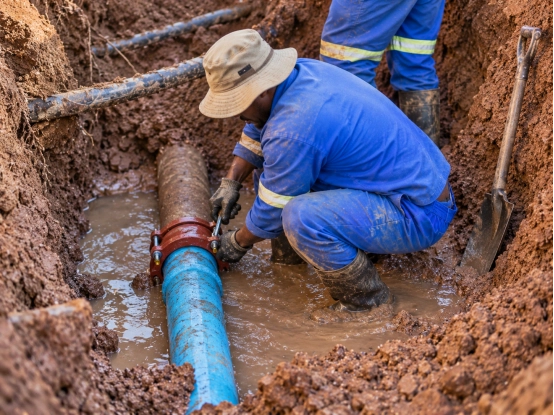
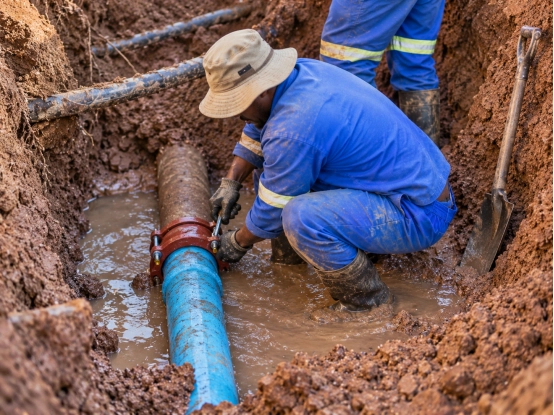
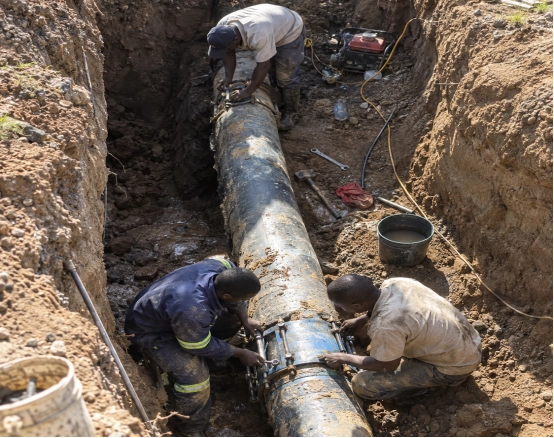
In one Kampala neighbourhood, households wait for water supply to reach hilltop taps, while field crews fix leaking joints and burst water mains lower in the distribution network. These common Kampala water pressure problems are driven by hilly terrain, intermittent supply and ageing mixed‑material pipelines. Choosing the correct repair clamp or universal coupling is critical for fast, long‑lasting underground pipe repairs across Uganda’s urban water systems.
The short answer is that terrain and stop-start supply create changing conditions, while the age, material, and condition of each pipe determine where trouble appears. Local repair products can close a leak or reconnect a replaced section, but they cannot create more water or correct pressure across an entire city.
Kampala’s Pressure Problem Is Also a Geography Problem
Kampala is a useful example for fast-growing African cities because its water network serves very different elevations. A 2021 account in The Source described a city extending over 21 hills, where storage and booster pumping helped supply higher locations.
Think of the network as connected slopes. Water needs more help to reach a hilltop, and distant areas can receive less reliable service. After an interruption, the line does not instantly return to a calm, even flow.
This does not mean every low-lying pipe faces excessive pressure or every hilltop has weak service. It means location matters. Operators must consider elevation, demand, pumps, valves, and local pipe condition together. The lesson applies well beyond Uganda, including hillside suburbs and expanding peri-urban settlements across Africa.
Why Stop-Start Supply Can Expose Weak Pipe Sections
A sound pipe does not normally fail just because supply is intermittent. Changing operation more often exposes a weakness already present.
When a line loses pressure, air can enter. Returning water moves that air and refills branches at different speeds. Pumps and valves also change the force in the network. Corroded pipe, a tired gasket, or a poorly supported connection may cope during steady operation but leak during refill.
Mixed networks add another complication. One street may contain old metal pipe, newer PVC, an HDPE extension, and earlier repairs. Their outside diameters and response to movement can differ. A once-sound connection may weaken after traffic loading, soil movement, or repeated pressure changes.
A visible burst is therefore evidence, not just an isolated emergency. After controlling the leak, the team should ask what the failure reveals about the surrounding pipe and local operation.
What a Local Pipe Repair Can and Cannot Solve
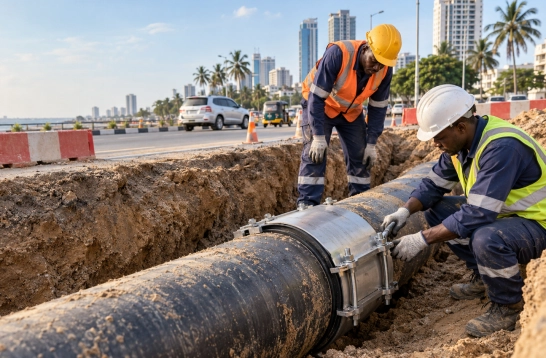
A repair clamp can be valuable when damage is localized and the remaining pipe is sound enough to hold a seal. It can cover a pinhole, circumferential break, or short damaged area without replacing a long section. The practical benefit is simple: stop physical water loss, restore service, and avoid opening more road than necessary.
Conflex groups several pipe repair clamp options for different pipe conditions and repair widths. Product choice still depends on actual measurements and operating conditions, not only the nominal pipe size.
| What the Team Finds | Likely Local Response | What Still Needs Attention |
| Small, contained leak on otherwise sound pipe | Correctly sized repair clamp | Surface condition and pressure rating |
| Damaged section between two sound ends | Remove the weak length and install a replacement spool | Outside diameters, alignment, and support |
| Pipe may pull apart or move along its length | Consider a restrained connection | Thrust, anchoring, and pipe movement |
| Repeated failures across the same zone | Investigate the wider network | Pressure control, pipe renewal, valves, and demand |
A clamp is not the right answer for every failure. A long split, badly crushed pipe, deep corrosion extending beyond the seal, or repeated breaks may justify replacing the section. Nor can a clamp correct insufficient production, poor zoning, or unreliable pumping.
That boundary matters when discussing non-revenue water in Africa. Fast leak repair protects treated water, but lasting improvement also needs detection, metering, pressure management, sound records, and planned renewal.
A Practical Response for Mixed Urban Networks
The useful field question is not “Which product fits Kampala?” It is “What exactly is in this trench?” Four facts make the first decision clearer: pipe material, measured outside diameter, working pressure, and the shape and length of the damage.
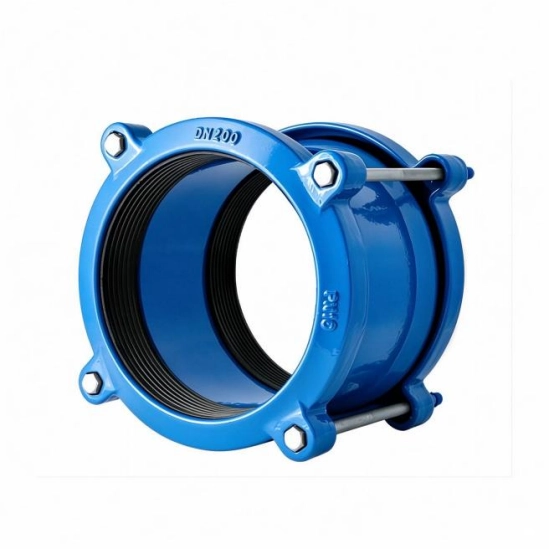
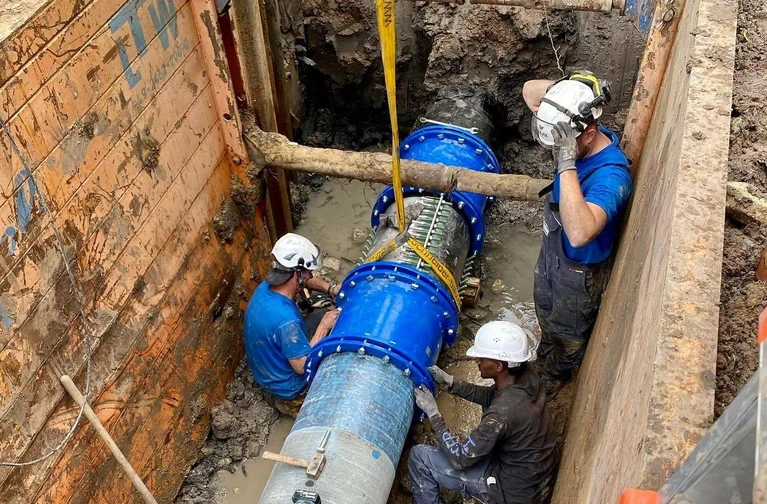
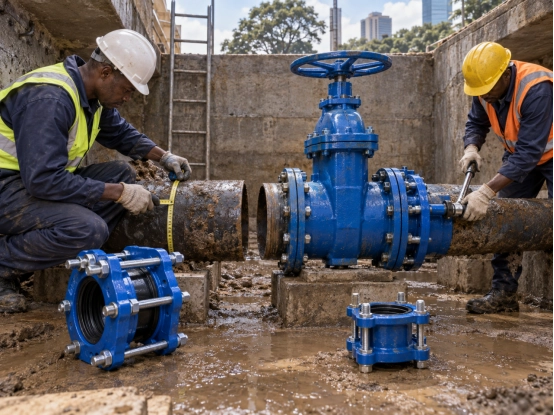
If a weak section is removed and the two remaining pipe ends have compatible dimensions, a accoppiamento universale (Wide Range Flexible Coupling) can connect several common materials, including ductile iron, steel, PE, and PVC within its stated outside‑diameter range. This fitting is widely used for African mixed urban water networks where old and new pipe types run side‑by‑side. Where there is a real risk that the pipe could move or pull out, a giunto universale vincolato adds mechanical grip. Restraint does not remove the need for suitable supports or a sound network design.
For teams serving a large and varied city, consistent field records may be as valuable as the fitting itself. Recording dimensions, material, damage, and repair history helps the next crew arrive with a more realistic option and helps managers see when repeated local repairs are pointing to a larger renewal need.
Domande frequenti
These short answers address the questions that often follow when pressure problems, mixed pipe materials, and recurring leaks appear in the same network.
Does Low Pressure Mean There Is No Risk of a Pipe Burst?
No. A low reading at one tap or at one time does not describe every condition in the network. Refill events, pump starts, valve changes, elevation, and the condition of a particular pipe can all affect the force at a weak point.
Can a Repair Clamp Stop Every Kind of Leak?
No. A clamp works best on suitable localized damage where the surrounding pipe can support the seal. Severe deformation, long cracks, widespread corrosion, or a pipe wall that continues to break down may require section replacement.
Can One Coupling Join Different Pipe Materials?
Sometimes. A universal coupling can connect different materials when both outside diameters fall within its stated range. The team must also check pressure, pipe-end condition, alignment, support, and whether the joint needs restraint.
Why Do Some Repaired Locations Fail Again?
The first repair may stop the visible leak without removing its cause. Pipe movement, poor bedding, corrosion beyond the repaired area, incorrect sizing, uneven tightening, or recurring pressure changes can create another failure nearby.
What Information Should a Water Team Record Before Choosing a Product?
Record the pipe material, actual outside diameter, working pressure, damage shape and length, surface condition, available working space, and any sign of axial movement. Photos and measurements are more useful than nominal size alone.
Before the Next Pressure Cycle
Kampala’s experience is a reminder for water teams across Africa: reliable service depends on both the big network and the small connections underground. Pressure management, storage, pumping, and renewal shape the system. Well-matched clamps and couplings help prevent a local weak point from wasting more water than it should.
For a specific repair or transition, teams can get in touch via our contact‑us page and share the pipe material, measured outside diameter, operating pressure, and a clear description of the damage. Our universal couplings and repair clamps hold full WRAS approval for potable drinking‑water applications, delivering safe, reliable connections for municipal water distribution networks. Those four key details provide a practical starting point for our technical team to carry out a full compatibility review before the next planned shutdown or pipe‑network refill.
 Italian
  English
  Arabic
  Chinese
  French
  German
  Indonesian
  Kazakh
  Kyrgyz
  Portuguese
  Russian
  Spanish
  Swahili
  Uzbek
Uzbek