



Mixed-Pipe Water Networks in Africa: Lessons from Simiyu, Tanzania
As African water networks expand, buried pipelines are frequently assembled from multiple sources and different pipe materials. The Simiyu, Tanzania water supply expansion project serves as a valuable real-world case study, combining ductile iron, steel and HDPE across transmission and distribution lines. For African water utilities and procurement teams, the practical solution for mixed-pipe networks relies on field-measured pipe ends, working pressure, ground movement constraints and site access — combined with WRAS-certified pipe fittings to guarantee safe potable-water performance. Do not rely purely on nominal DN sizes for joint selection.
That decision matters because one difficult joint can delay a repair, extend a shutdown or force hot work in a place where crews have limited time. The aim is not to make every connection complicated. It is to make the important differences visible before the fitting is ordered.
Why a Mixed-Pipe Water Network Matters in Africa
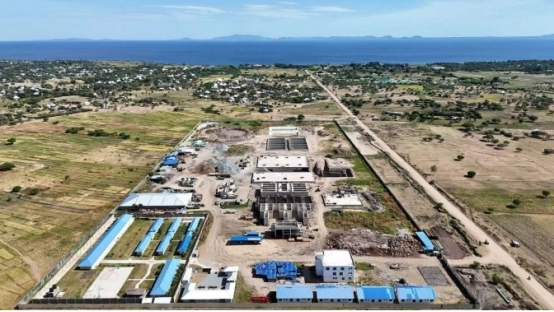
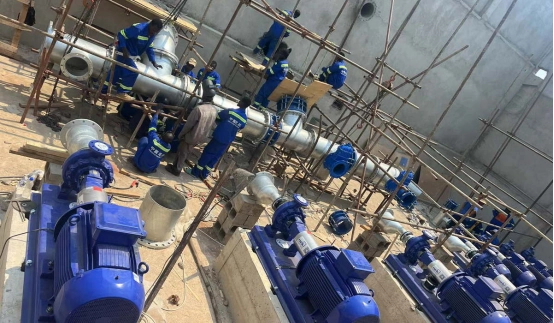
Simiyu’s water supply expansion shows the scale of the challenge. The project covers intake and treatment facilities, storage tanks, long transmission routes and distribution networks serving several communities. Conflex’s project references document the Simiyu system, where ductile iron, steel and locally-sourced HDPE pipelines connect on PN16 trunk mains. For these multi-material drinking-water junctions, WRAS-certified mechanical fittings eliminate risks of water contamination while handling dimensional differences between dissimilar pipe materials.
For a buyer, that is more than a list of materials. It means a connection at a tank outlet may face a different problem from one buried along a road. A pump station may need controlled removal space. A transition between old and new pipe may need tolerance for real outside-diameter differences. The same catalogue label cannot answer all three situations.
The useful question is therefore not “Which fitting is cheapest?” It is “What must this joint do after the crew leaves?” It may need to seal a local defect, join two prepared ends, handle limited movement or make future valve maintenance easier. That framing keeps the purchase practical and protects the service goal behind the project.
Why Simiyu’s Network Needs Flexible Connections
Mixed materials are not automatically a problem. The difficulty appears when their differences are hidden by a drawing or a nominal DN. Steel, ductile iron and HDPE can have different outside diameters, wall behaviour and responses to settlement. A joint that looks aligned above ground may need more tolerance after backfilling.
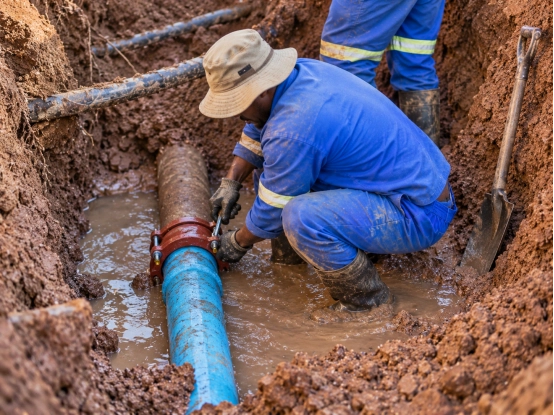
The project page also points to uneven ground, seasonal rain and buried-pipeline settlement risk. Those are useful reminders for buyers in many African markets. The connection must be considered alongside the soil, available working space, pipe support and the sequence of installation. A technically suitable part can still be a poor field choice if the crew cannot position it, tighten it evenly or inspect the seal.
This is why the Simiyu water supply expansion project is a useful reference for procurement conversations. It puts a familiar buyer concern into a real setting: mixed-source pipe procurement can create dimensional variation, while the water network still has to be installed and maintained on schedule.
What Goes Wrong When Different Pipe Materials Meet?
The most common problems are easier to understand when they are tied to what a crew sees in the trench:
| What is happening? | Connection family to consider | Main checks | Compliance Note |
| A short hole, crack or local leak on sound pipe | Morsetto di riparazione | Damage length, pipe OD, pressure and sealing surface | Conflex repair clamps are WRAS certified for potable drinking water |
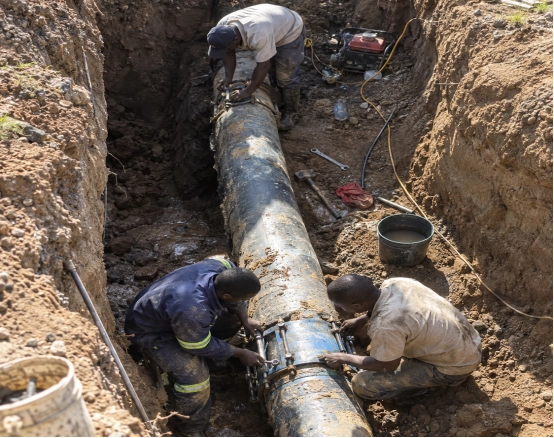
| A damaged length has been removed and unlike pipe ends remain | Acoppiamento universale | Both ODs, insertion length, alignment and axial movement | WRAS approved Conflex universal couplings for dissimilar material pipe transitions |
| A pipe could pull apart or needs extra joint grip | Restrained universal coupling | Pull out risk, thrust control, support and pressure | Restrained WRAS certified couplings for HDPE / steel / ductile iron mixed networks |
| A valve, pump or meter must be removed later | Flanged or dismantling connection | Flange pattern, face to face space and take out distance | WRAS certified dismantling joints for planned pump station maintenance |
Coatings, corrosion and ovality add small differences that matter at the sealing surface. So does the condition of a cut pipe end. A universal coupling may cover a useful diameter range, but the range does not replace field measurement. Nor does a flexible connection remove the need for sound bedding, supports or a suitable pressure class.
These details affect procurement lead time. If the team measures only after excavation, the first shipment may be the wrong size. If a project uses several pipe sources, a simple joint schedule with measured ODs can prevent repeated calls between the site, contractor and supplier.
Which Universal Coupling Fits the Actual Pipe Problem?
Start with the job, then match the connection type:
| What is happening? | Connection family to consider | Main checks |
| A short hole, crack or local leak on sound pipe | Morsetto di riparazione | Damage length, pipe OD, pressure and sealing surface |
| A damaged length has been removed and unlike pipe ends remain | Acoppiamento universale | Both ODs, insertion length, alignment and axial movement |
| A pipe could pull apart or needs extra joint grip | Restrained universal coupling | Pull-out risk, thrust control, support and pressure |
| A valve, pump or meter must be removed later | Flanged or dismantling connection | Flange pattern, face-to-face space and take-out distance |
The distinction is useful in a real buying meeting. A repair clamp is a targeted response to local damage; it is not a substitute for replacing a pipe that is crushed or weakened over a long length. A universal coupling joins prepared ends; it does not decide whether the surrounding pipe is adequately supported. A restrained design can help at a joint where axial movement is a real concern, but it does not replace the wider thrust and anchoring plan.
For drinking-water work, buyers should also confirm gasket suitability, pressure class, coating requirements, delivery documentation and the installation method expected by the utility. These checks are ordinary purchasing work, but they become more important when the network crosses different materials and local supply chains.
Domande frequenti
Can Different Pipe Materials Share One Coupling?
They can when the actual outside diameters, pressure, pipe-end condition, alignment and movement requirements fit the coupling’s stated range. Material names alone are not enough to confirm a joint.
Why Is Measured Outside Diameter More Useful Than Nominal Size?
Older and mixed-source pipes can vary around the same nominal size. The sleeve and gasket must seal the real outside surface, so measurements taken at the trench are more useful than DN alone.
When Does a Repair Clamp Make Sense?
A clamp suits localized damage where the surrounding pipe can support the seal. A long split, crushed section or widespread corrosion may call for a replacement section or a different repair method.
Does a Restrained Coupling Replace Pipe Anchoring?
No. Restraint can help manage pull-out at a joint, but supports, thrust control and the wider pipeline layout still matter. The connection should be selected with those forces in view.
What Should Be Recorded After a Water Pipe Repair?
Record the material, measured OD, pressure, damage, product, installation notes, photos and location. That information helps the next maintenance team prepare a realistic response.
Why choose WRAS-certified pipe fittings for African mixedmaterial water networks such as Simiyu Tanzania?
WRAS certification validates that fitting materials and gaskets do not contaminate drinking water. For mixed-pipe networks combining ductile iron, steel and HDPE in Simiyu and other African locations, WRASapproved Conflex repair clamps, universal couplings and dismantling joints meet international potable-water standards for municipal water-supply projects.
How to Check Water Pipe Connection Compatibility
For a specific transition or repair, start a compatibility discussion with the measured outside diameters, pipe materials, operating pressure, damage or interface type, available working space and destination country. Those details give an African project team a useful starting point before the next shutdown or delivery.
 Italian
  English
  Arabic
  Chinese
  French
  German
  Indonesian
  Kazakh
  Kyrgyz
  Portuguese
  Russian
  Spanish
  Swahili
  Uzbek
Uzbek