



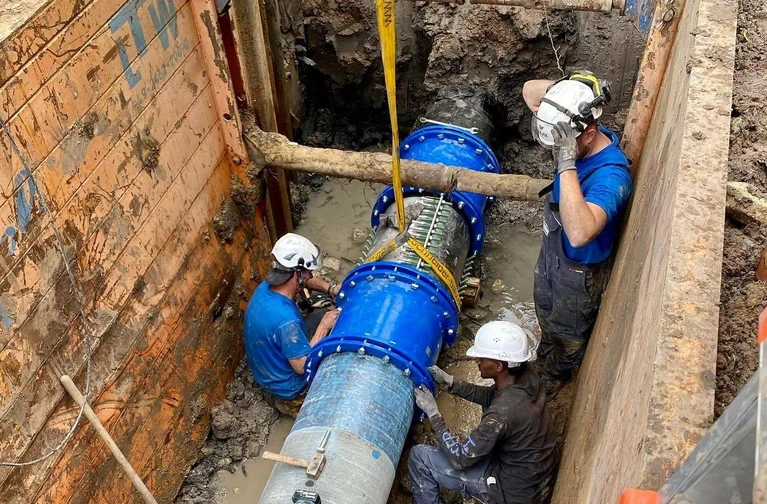
In Nairobi, a dry tap does not always mean that the city lacks water at the source. A leaking main or a burst under a busy road can keep a neighborhood waiting. In peri-urban areas, one failed section quickly affects homes, clinics and small factories.
That challenge appears across many African cities. New treatment capacity matters. So do the pipes and fittings that carry treated water to customers. Expansion combines new supply with network extension, leakage control and faster maintenance.
Why Nairobi’s Pipe and Water-Supply Problems Matter
Nairobi is a useful starting point because several engineering problems share the same trench. Older mains work alongside HDPE and PVC lines. Pump starts alter pressure. Road construction can expose buried assets. A small defect becomes a major outage when crews lack the right connection.
Intermittent supply also encourages private storage and makes pressure management harder. Low pressure can allow contamination through faulty joints. High pressure can turn a pinhole leak into a split. Current reports from the Nairobi City Water and Sewerage Company and Kenya’s Water Services Regulatory Board should support any city-specific figures.
The broader lesson is direct: expansion needs a network that can be inspected, adapted and repaired while customers remain connected.
What Different African Cities Are Doing
The details vary by city, yet the operating pattern is familiar. Dense districts need compact connections around congested rights of way. Inland cities may face long runs between treatment works and new settlements. Drought-prone cities must protect every cubic metre produced. A workable plan links construction with maintenance.
| City | Typical pressure point | Infrastructure response |
| Nairobi | Expanding peri-urban network and leakage | Leak detection, district metering and network rehabilitation |
| Lagos | Dense development and mixed pipe materials | Adaptable connections and phased network extension |
| Accra | Uneven service and pressure variation | Pressure management and local distribution upgrades |
| Cape Town | Drought and demand pressure | Loss reduction and resilient supply planning |
Use local asset registers and field surveys to set specifications.
Five Ways African Cities Are Expanding Water Infrastructure
Strong programs combine civil works with field decisions. These moves determine whether a project delivers dependable service.
1. Mapping Demand and Leakage Before Building More Capacity
A city cannot manage what it cannot see. Utilities divide networks into district metered areas, compare inflow with billed consumption and track pressure through the day. Acoustic surveys and targeted excavation narrow the search for hidden leaks.
A valve replacement or pressure reduction station may recover capacity before a new treatment plant is needed. The same work shows which pipe sizes and repair parts crews should keep in local stores.
2. Adding Treatment Plants, Reservoirs and Bulk-Water Capacity
Source and treatment projects remain essential as urban demand rises. Cities are adding reservoirs, pumping stations and transmission mains. Those assets need a compatible distribution network beyond the project boundary.
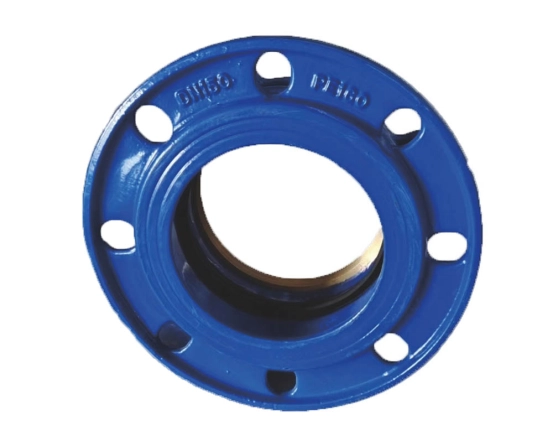
Connections become difficult when a new main meets an older line with a different outside diameter or material. Adaptable couplings and flange transitions can reduce site modification and make commissioning more predictable.
3. Extending Last-Mile Distribution to Underserved Areas
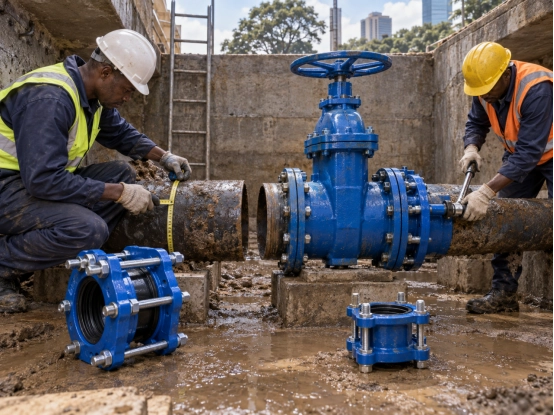
New housing, industrial parks and informal settlements rarely expand in neat engineering increments. A project may connect ductile iron trunk lines to HDPE branches, then add PVC sections later. Each transition creates a chance of misalignment or an incompatible joint.
Designers should work from actual outside diameters. They need room for tightening, inspection and removal. A connection that fits on paper but cannot be serviced in a narrow excavation will cost time during the next outage.
4. Repairing Pipes Without Long Service Shutdowns
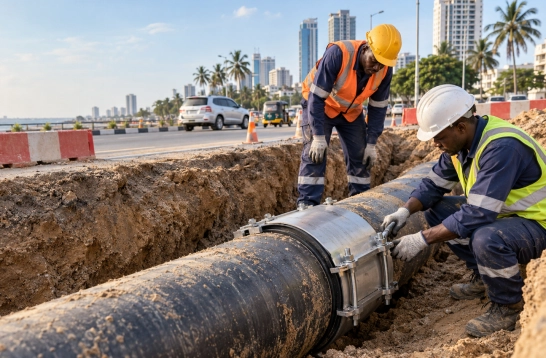
Water teams often meet a simple problem in a difficult place: a split at a pipe wall, corrosion near a joint or a damaged flange beneath traffic. Replacing a long section may require a shutdown, road control and heavy lifting. A correctly selected repair clamp can isolate the defect and return the line to service sooner.
The choice requires discipline. Start with the pipe material and outside diameter. Then check pressure, temperature and fluid. A clamp for rigid metal is not automatically suitable for flexible plastic. Restraint may be needed where end loads could push the repaired section apart.
5. Designing for Climate, Corrosion and Ground Movement
Buried networks move. Seasonal moisture can soften soil. Heavy vehicles create vibration. Coastal air and aggressive soil accelerate corrosion. Thermal movement is easy to overlook near pump stations.
Flexible joints and expansion components give the system room to absorb movement. Stainless steel helps where corrosion resistance is a priority. Gasket selection must follow the fluid and temperature. Potable-water approval in one market does not replace local approval or testing.
Where Pipe Connections and Repair Products Fit
The component decision usually starts with the failure or connection condition. The table below gives a practical route for moving from a field observation to a product conversation.
| Field problem | Relevant Conflex solution | Buyer should confirm |
| Leak on a metal or non-metallic main | Stainless steel repair clamp connector | Outside diameter, pipe material, pressure and gasket |
| Joining pipes with different materials | Acoppiamento universale | Diameter range and restraint requirement |
| Flange connection to HDPE or PVC | Flange adaptor for HDPE and PVC pipe | Flange drilling, pressure class and standard |
| Movement, vibration or thermal change | Stainless steel flexible pipe | Allowable movement, temperature and fluid compatibility |
Read product data against the project specification. Confirm rated pressure and gasket compound. Check the coating and test standard before releasing an order. For potable water, verify approval language for the installation country.
Procurement Practices That Make Expansion Sustainable
Procurement teams can speed maintenance by standardizing common diameters and keeping critical repair sizes in regional stores. The request should include outside diameter, material, service fluid, pressure and temperature. Photos help when a flange or damaged section is difficult to identify.
Good suppliers provide drawings, installation guidance and traceable test information. That support matters during overnight work and municipal approval.
Domande frequenti
These questions cover the information most useful during a pipeline survey or early purchasing discussion.
What products are used to connect different water pipe materials?
Universal couplings and flange adaptors are common choices for transitions between metal, HDPE and PVC. Selection depends on outside diameter, pressure class, restraint and the flange standard. Pipe ends must be measured before specifying the fitting.
How do pipe repair clamps help African water utilities?
They address localized leaks without replacing an entire pipe section. That can reduce excavation, traffic disruption and shutdown time. The clamp must match the damage, pipe surface and pressure. It is not a substitute for a structural assessment when the pipe has lost strength.
What information should buyers send to a pipe fitting manufacturer?
Send the pipe material and outside diameter. Add service fluid, working pressure, temperature and connection type. Include quantity, installation location and local standards or approvals. A marked-up photo can resolve uncertainty around access and flange orientation.
Conclusione
African cities are expanding water infrastructure by adding capacity and making distribution easier to maintain. Nairobi’s pipe problems show why leak control and rapid repair belong in the same plan. For a project review, share your pipe requirements with Conflex with the pipe material, outside diameter and pressure rating.


 Italian
  English
  Arabic
  Chinese
  French
  German
  Indonesian
  Kazakh
  Kyrgyz
  Portuguese
  Russian
  Spanish
  Swahili
  Uzbek
Uzbek