




During a pump shutdown, the awkward question is rarely “Which joint brand?” It is “What is this connection actually measuring?” A fitting marked DN200 may be close, or it may be a poor fit once flange spacing, corrosion and alignment are taken into account. Discovering that after the line is isolated is an expensive way to take a measurement. For Nigerian municipal potable-water pump-station applications, specifiers must also require WRAS-approved rubber elastomer materials to prevent drinking-water contamination risks.
For a Nigerian rubber expansion joint enquiry, start with the pipe and the equipment beside it. Write down what is known and circle anything that is still an estimate. A supplier can review an uncertainty before dispatch; the pump room is a poor place to discover one.
| Field | Information to provide | Perché è importante | Compliance Note |
| Connection | DN, flange drilling, face-to-face length and pipe material | Confirms the mechanical fit before the line is opened | – |
| Service | Medium, concentration, working pressure, test pressure and temperature | Supports the rubber compound and reinforcement review | For potable-water service, rubber elastomer shall be WRAS-approved |
| Movement | Axial, lateral or angular value and direction | Defines the movement reserve required at the joint | – |
| Restraint | Anchors, guides, control units and support shoes | Shows where pressure thrust and equipment loads are carried | – |
| Site | Chamber or building location, access and shutdown limits | Helps plan lifting, bolt access and the installation sequence | – |
How to specify a rubber expansion joint for a Nigerian water project
Put the measured connection details at the top of the RFQ. Record DN, flange drilling, face-to-face space, pipe material, medium, working pressure, test pressure and temperature. A photograph with a ruler beside an existing joint often answers the question that “DN200” leaves open.
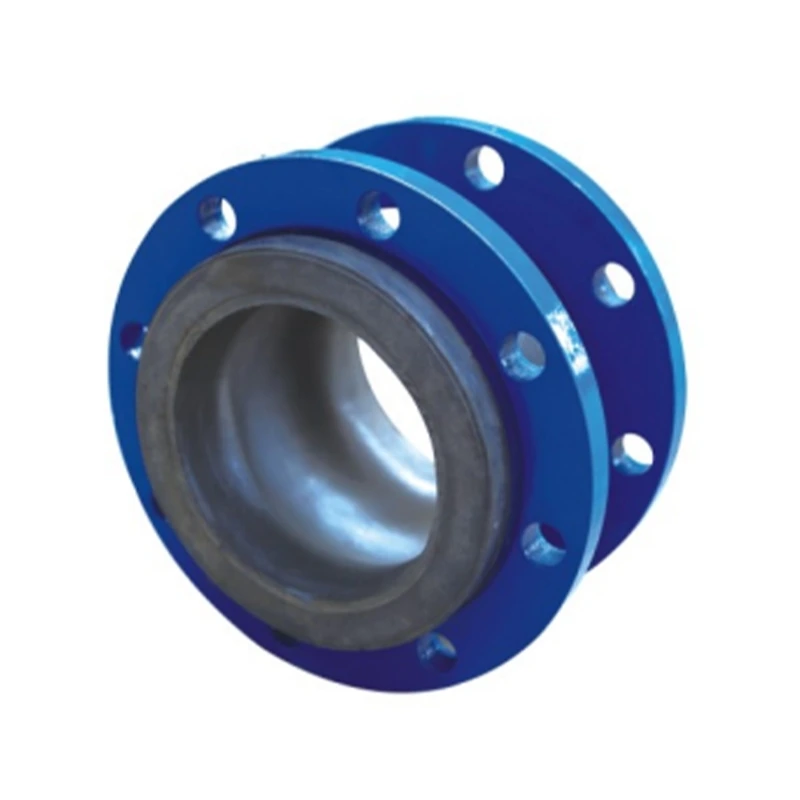
The WRAS-approved Conflex rubber expansion joint is published from DN50 to DN1400. Its page gives PN10, PN16 and PN25 options, -15°C to +115°C, and water, seawater, oil, acid and alkali applications for the appropriate configuration. Treat that as family information. The proposed body, reinforcement, flange and rubber compound still need to suit the service.
Name the medium plainly. Potable water, recycled water, chemically dosed water and seawater do not create the same elastomer question. For potable-water service in Nigeria, require WRAS approval for the rubber compound. “Water” is not a material certificate.
When a rubber expansion joint is the wrong choice
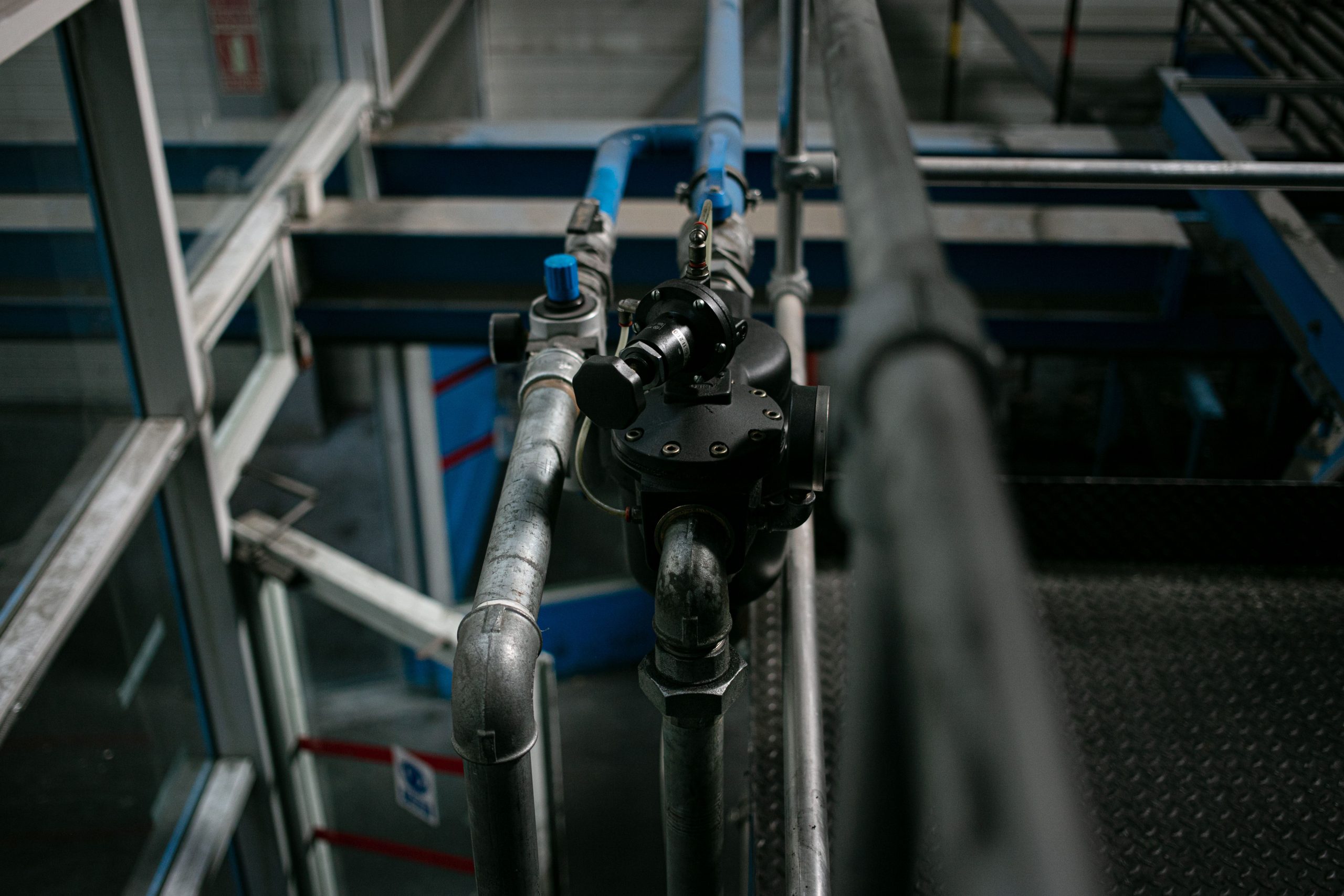
Look at the pipe around the leak or vibration. A pump, valve or long pipe span should not be hanging from the flexible joint. Without a fixed point, the line has no defined path for pressure thrust. When the flanges meet only after the pipe is pulled sideways, the problem is alignment, not flexibility.
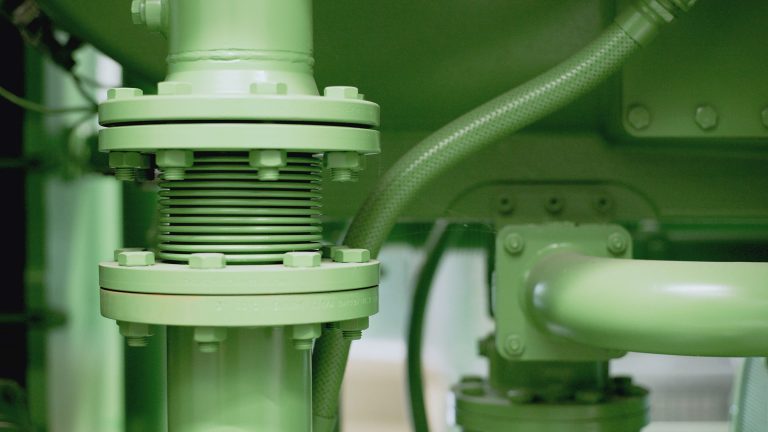
Material may change the choice. Conflex’s compensatore in acciaio inox is a different family with a different temperature and material boundary. Rubber may suit one metal-pipe connection while a stainless bellows is chosen for another. If a tender accepts both, state the duty that drives the preference before bidders prepare offers.
Movement and support
Write the expected movement beside the joint on the drawing. Pump vibration, thermal expansion, settlement and angular deviation are separate inputs. Record the normal position and the maximum axial, lateral or angular movement. A gap left after the crew has forced a pipe into place is a site observation, not a design value.
Show the pump, valve, guides, anchors and support shoes on the same detail. The engineer needs to know where pressure thrust goes. The rubber joint can absorb the movement allowed by the design; it cannot become a thrust block or substitute for support.
For the quotation, send the pump arrangement and piping isometric with the measured data. A chamber, an exposed building and a treatment skid bring different access and corrosion concerns. Include the location so the supplier can return a model and a drawing that can be checked before the shutdown.
What should the supplier return?
A useful response contains more than a catalogue photograph. Ask for the proposed model, dimensions, flange drilling, material schedule, pressure rating, movement limits, test information and installation instructions. If control units or tie rods are included, the drawing should show how they fit the adjacent supports.
For a replacement, compare the old face-to-face dimension with the approved new dimension before removing the spool. Add the isolation method, lifting route and bolt-access space when the shutdown is short. These are project controls for this installation, not universal Nigerian rules.
Installation and records
The delivery crate is the first inspection point. The tag, DN, flange drilling, rubber surface, bolts and accessories should agree with the approved submittal. At the pipe, parallel flange faces and complete supports are the basic check. Pulling the line sideways to make the joint reach is a reason to stop.
The joint belongs at its approved length. Stretching it over a missing spool, compressing it to hide a pipe error or twisting it around the axis uses up the movement reserve. Even bolt tightening and an unfolded rubber flange matter. The pump, valve and long pipe span still need their own supports.
During hydrostatic testing and commissioning, the handover file should carry test pressure, leakage, visible movement, abnormal vibration, product reference, inspection date and any guide adjustment. For an old connection, add flange cleanliness, bolt material, future retightening access and standing-water exposure. The next shutdown team should be able to identify the installed joint without guesswork.
Send the completed field package including WRAS-approval requirements for potable-water rubber components through the rubber expansion joint product page o Conflex’s project enquiry channel for a technical review for Nigerian water-supply projects.
FAQ
Q: Is a rubber expansion joint a thrust block?
A: No. It accommodates the movement allowed by the design. Anchors, guides and supports still manage pressure thrust, equipment loads and pipe alignment.
Q: Which pressure and temperature range does Conflex publish for this joint?
A: Conflex publishes PN10, PN16 and PN25 options and -15°C to +115°C for the family. The exact rubber compound, medium and size still need checking before a model is selected.
Q: What information makes a Nigerian quotation useful?
A: The useful package contains the layout, DN, flange standard, face-to-face length, medium, pressure, temperature, movement, restraint details, site conditions and quantity. Add a connection photograph when replacing an existing fitting.
Q: Why specify WRAS-approved rubber expansion joints for Nigerian potable-water pump stations?
A: WRAS-approval validates that the rubber elastomer material will not leach contaminants into drinking-water. For Nigerian municipal water tenders, WRAS approval for wetted rubber components is often a mandatory compliance requirement for pump-station flexible connections.


 Italian
 English
 Arabic
 Chinese
 French
 German
 Indonesian
 Kazakh
 Kyrgyz
 Portuguese
 Russian
 Spanish
 Swahili
 Uzbek