





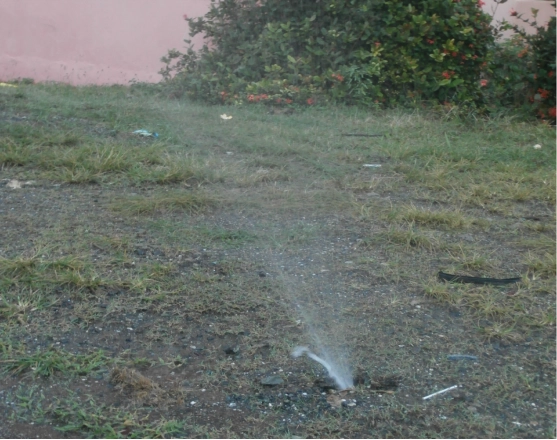
Dar es Salaam offers a hard lesson in water network rehabilitation. The World Bank reported that the city’s non-revenue water rate reached 53% in 2015/2016. Not every lost cubic metre came from a failed joint. A network under pressure still cannot afford avoidable connection leaks.
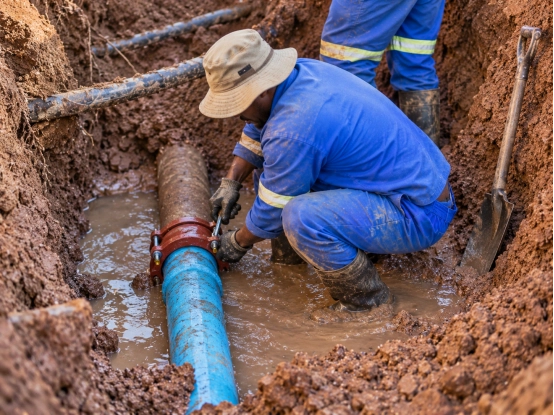
Picture a crew replacing an isolation valve on a ductile iron main. The pipe is plain-ended. The new valve is flanged. Service must return before the evening peak. Adapter selection is now an engineering decision.
Why the Right Flange Adapter Matters in an Aging Water Network
A flange adapter looks simple on a drawing. On site, dimensions and pressure meet installation quality. One error can turn a four-hour shutdown into an excavation lasting all night.
One Incorrect Specification Can Create Several Risks
The wrong outside-diameter range may prevent even gasket compression. Incorrect drilling can make the valve impossible to bolt up. An incompatible gasket may swell or harden. Weak coating can shorten the life of a buried joint. Crews also pull valves into position with flange bolts. The trapped load often returns later as seepage.
What Is a Flange Adapter for a Ductile Iron Pipe?
The component creates a mechanical transition between plain-ended DI pipe and flanged equipment. It avoids welding and reduces cutting during later removal.
Its Function in a Pipeline
The body slips over the pipe end. A gasket sits between body and gland. Gland bolts compress it around the pipe. The flanged face connects to equipment. The assembly tolerates limited variation but does not replace supports or thrust restraint.
Flange Adapter vs. Similar Products
A flange adapter connects a plain end to a flange. A coupling joins two plain ends. A dismantling joint provides axial adjustment. A repair clamp seals pipe-wall damage. Their duties are not interchangeable. A leaking barrel needs repair. A sound DI main meeting a new valve needs an adapter.
Seven Factors to Check Before Selecting a DI Pipe Flange Adapter
Good selection starts with site data. A purchase request that says only “DN300 flange adapter” leaves too much unresolved. The following checks should appear on the inquiry sheet.
1. Confirm the Pipe’s Actual Outside Diameter
DN is not a field measurement. Measure the outside diameter at several points. Check ovality and surface buildup. Remove loose corrosion. The measured OD must sit inside the adapter’s published range.
Old coating repairs may also change the usable sealing surface.
2. Match the Flange Drilling Standard
Confirm the mating flange standard from its drawing or nameplate. Check its bolt circle and hole pattern. EN and ANSI flanges of the same DN may not match. If records are missing, send measurements and photographs. Enlarging holes can weaken the flange while leaving the gasket off-centre.

3. Select the Correct Pressure Rating
Compare the adapter rating with operating and test pressure. Include surge pressure. A PN16 network does not justify a PN16 adapter if transients exceed its allowance. The joint rating is limited by its lowest-rated part.
4. Choose the Gasket for the Conveyed Medium
EPDM is common in treated-water service. SBR may suit wastewater. NBR is normally considered for oil.
| Pipeline medium | Gasket option to evaluate | Selection note |
| Potable or treated water | EPDM | Confirm drinking-water approval |
| Neutral water or wastewater | EPDM/SBR | Check temperature and chemical content |
| Oil or hydrocarbon service | NBR | Verify exact fluid compatibility |
Safety note: final gasket selection should follow the manufacturer’s chemical compatibility data. Potable-water projects need the required local approval.
5. Evaluate Temperature and Environmental Exposure
Fluid temperature affects the gasket. Soil conditions affect everything outside it. Buried adapters in saline ground need suitable coating and protected fasteners. Inspect coating damage before lowering the assembly. A scrape repaired before burial costs little. After backfilling, it does not.
6. Account for Alignment and Pipe Movement
A flexible flange adapter accepts limited angular deviation. It cannot correct a major offset or carry an unsupported valve. Check expected settlement and axial movement. Where pressure can pull the joint apart, provide engineered restraint or anchorage. Gasket friction is not thrust control.
7. Check Certifications and Project Documentation
Request a dimensional drawing and material specification. Review test records and coating data before shipment. Check potable-water approvals where required. Installation instructions must reach the crew.
Matching the Adapter to Common Pipeline Rehabilitation Scenarios
One product family can serve different jobs. The operating context changes the risk.
Scenario A: Replacing an Isolation Valve in a Municipal Water Main
Clean and measure the DI pipe. Match the valve drilling and pressure class. For buried service, specify a water-compatible gasket and suitable coating. Leave space for even bolt tightening.
Scenario B: Connecting an Existing Main to a New Pump or Flowmeter
Support the pump or meter independently. Confirm the flange face and leave removal space. Assess vibration instead of handing it to the adapter as an afterthought.
Scenario C: Working with an Old or Uncertain Pipe Specification
Do not guess if the pipe is oval. Record its minimum and maximum OD. Photograph markings and the flange. Include medium and pressure with the inquiry. A verified configuration is safer than forcing a standard item onto uncertain pipework.
Installation Checks That Protect the Selected Adapter
Correct hardware can still leak after a rushed installation. The sealing area needs the same attention given to product selection.
Checklist:
- Isolate and fully depressurize the pipeline.
- Clean the pipe end and remove loose rust or debris.
- Inspect the pipe surface and gasket for defects.
- Confirm sufficient insertion depth.
- Align the adapter without forcing the pipe or valve into position.
- Tighten bolts gradually in a cross-pattern sequence.
- Use the manufacturer’s specified torque values.
- Conduct a controlled pressure or leak test.
- Reinspect the connection after commissioning when required.
Even a correctly specified adapter can leak if the gasket is damaged or the bolts are tightened unevenly.
FAQs About DI Pipe Flange Adapters
Суроо: Can a flange adapter connect a ductile iron pipe directly to a valve?
Yes. The pipe OD must fit the adapter range. Flange drilling, pressure class and gasket material must also match the service.
Суроо: How do I determine the correct flange adapter size?
Use the measured pipe OD and mating flange dimensions. Nominal diameter alone is not enough.
Суроо: Which gasket is suitable for drinking water?
EPDM is widely used. Confirm its temperature range and the potable-water approval required in the project location.
Суроо: Can a flexible flange adapter correct pipe misalignment?
It accommodates limited angular deviation. Severe offset or uncontrolled movement requires correction elsewhere.
Selecting a Conflex Flange Adapter for Your Project
Complete field information speeds selection. Conflex offers flange adapters for ductile iron pipes from DN80 to DN2000. Available classes are PN10/PN16/PN25/PN40.
Standard construction uses GGG50 ductile iron for body and gland. Gaskets include EPDM, SBR and NBR. Fasteners are available in carbon steel or stainless steel. Fusion-bonded epoxy provides corrosion protection. Published total angular deviation is ±3 degrees. Custom designs are available.
Send Conflex the pipe DN and measured OD. Include flange standard and operating pressure. State the medium and site conditions. The engineering team can recommend a configuration before excavation.
Request a Flange Adapter Recommendation
 Kyrgyz
  English
  Arabic
  Chinese
  French
  German
  Indonesian
  Italian
  Kazakh
  Portuguese
  Russian
  Spanish
  Swahili
  Uzbek
Uzbek