




When a pump station is being assembled, the awkward question is rarely “Which compensator brand?” It is “What will this short fitting have to endure once the pump starts?” A DN200 part may fit the flange and still be a poor choice if the line is moving, the supports are incomplete or the pressure thrust is being sent into the wrong anchor. Discovering that after the pipe is aligned is an expensive way to learn what the drawing left out.
For a Tanzanian stainless steel compensator enquiry, begin with the connection in front of the design team. Write down the medium, pressure, temperature, movement, flange drilling and face-to-face space. Mark estimates as estimates. A supplier can review an uncertain dimension before dispatch; a pump room is a bad place to discover one.
| Field | Information to provide | Por que isso importa |
| Joint location | Suction, discharge, header or skid position | Connects the fitting to the actual vibration and support condition |
| Pipe connection | DN, pipe material, flange standard and face-to-face space | Confirms that the proposed part can be installed without forcing the line |
| Duty | Medium, working pressure, test pressure and temperature | Gives the product review a usable service boundary |
| Movement | Axial, lateral or angular value, direction and cycles | Shows how much movement the bellows is expected to absorb |
| Restraint | Anchors, guides, tie rods and nearby supports | Makes the pressure-thrust load path visible |
What is the compensator meant to absorb?
Put the answer in the drawing note. It may be pump vibration at a discharge, thermal movement in a header or a small angular deviation. These are not interchangeable duties. The fitting should not carry a pump, act as a pipe hanger or pull two badly aligned flanges together.
The location changes the review. A suction connection does not see exactly the same conditions as a discharge line. A fire-water header may be tested while the station is idle. A treatment skid may carry dosed water. Show the joint with nearby valves, fixed points, guides and supports, and give the available face-to-face length. “Water” is not enough when the medium is saline or chemically treated.
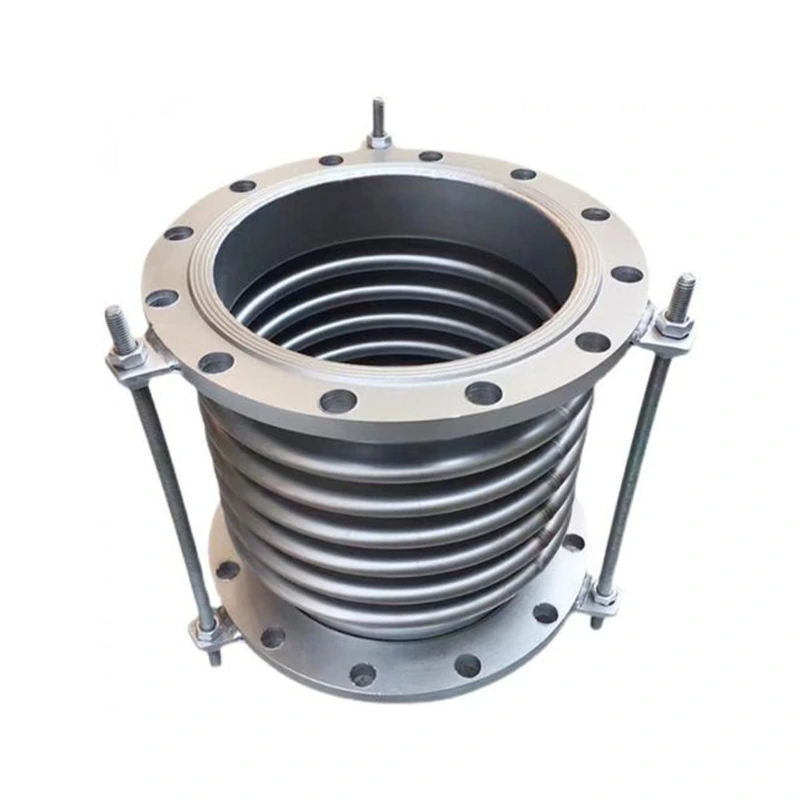
Autor: seurobet compensador em aço inoxidável is listed for water, fire, air-conditioning and steam piping. Its official page gives DN50-DN600, PN10/PN16/PN25 and a stated temperature range of -196°C to 450°C. Those figures set the product family boundary. They do not approve every combination of bellows, flange, medium and temperature.
When is a stainless steel compensator the wrong answer?
Sometimes the drawing is asking one flexible fitting to solve several unrelated problems. If the pump, valve and pipe are not independently supported, the fitting is being used as a hanger. If the line has no proper fixed point, the fitting is being asked to deal with pressure thrust. If the flange faces need to be pulled together, the line is not ready for a compensator.
There is also a material choice to make. Conflex’s junta de dilatação de borracha is a different family, with different temperature and material limits. A rubber joint may be suitable for one metal-pipe connection while a stainless bellows is preferred for another. If a tender accepts both, explain the reason for the selected family; otherwise quotations can look similar while allowing different movement.
What should the movement calculation show?
The layout should make the load path readable. It needs the pump, valve, guides, anchors, support shoes and compensator, plus the point intended to carry pressure thrust. Where sideways or angular movement is allowed, the direction and maximum value belong in the calculation.
Thermal movement follows pipe length, material and temperature change. Vibration is influenced by equipment speed and support stiffness. Pressure thrust belongs in the anchor and tie-rod review. Keeping those checks separate stops the compensator from becoming the accidental answer to every load in the room.
For a quotation, the design team can send the pump arrangement and piping isometric together with DN, pipe material, flange standard, working pressure, test pressure, temperature and calculated movement. A chamber, an exposed building and a treatment skid do not present the same installation conditions, so the location belongs in the request as well.
How should the fitting be checked on site?
The first check can happen beside the delivery crate. Compare the tag, dimensions, flange drilling and accessories with the approved submittal before lifting. At the pipe, the flange faces need to be parallel and the supports complete. If the line has to be pulled sideways to make the bellows reach, the alignment problem has arrived too late.
Set the assembly at its specified neutral length. Stretching it over a missing spool uses movement that the operating line may need later. Compressing it to hide a bad cut does the same. Twisting the bellows around its axis adds another unplanned load. The pump, valve and adjacent pipe need their own supports.
During the pressure test, the record can include leakage, visible movement and resonance, together with the model or batch reference, test pressure, inspection date and any guide adjustment. For a replacement, measure the old face-to-face length before removing the spool. Note corroded flange faces, seized guides and the access route for a crane or chain block. Those are site facts rather than catalogue facts, but they can decide the installation sequence.
What should go in the handover and quotation file?
The supplier’s return package should contain a dimensioned drawing, material schedule, flange drilling, pressure rating, movement data and test information. Chemically treated water needs its chemical and concentration stated. For a short shutdown, include the lifting route and bolt-access space. A technically correct fitting is of little use if it cannot be lifted into the room.
Keep the product reference with the station asset record. The next shutdown team should be able to find the drawing, installed face-to-face dimension and pressure-test note without guessing which of several similar fittings was used. That record also helps procurement keep the correct gasket and bolt set available.
Send the completed package to Conflex through the stainless steel compensator product page or the project enquiry channel for a model review.
Perguntas frequentes
Q: Can a stainless steel compensator carry a pump’s weight?
A: No. The pump, valve and connected pipe need separate supports. The compensator handles its specified movement and vibration duty, while anchors and guides manage thrust and alignment.
Q: Which pressure options are listed for the Conflex stainless steel compensator?
A: The product page lists PN10, PN16 and PN25 for the family. Final approval still depends on the selected DN, material, flange drilling, medium, temperature and test pressure.
Q: What should a Tanzanian contractor send for a quotation request?
A: Send the drawing, DN, flange standard, available length, medium, working and test pressure, temperature, expected movement, supports, site conditions and quantity. Add a photograph when replacing an existing fitting.


 Portuguese
 English
 Arabic
 Chinese
 French
 German
 Indonesian
 Italian
 Kazakh
 Kyrgyz
 Russian
 Spanish
 Swahili
 Uzbek