



The awkward failures are rarely dramatic. A chamber is complete, a valve has reached site, and all the labels show the correct DN. Nothing is obviously wrong—until the joint will not fit between the flanges. Sometimes the bolt pattern, rather than the length, is the surprise. For Malawi potable-water projects, drawing reviews should also confirm that the proposed dismantling joint carries WRAS certification for drinking-water service, avoiding later quality-compliance issues.
The mistake happened on paper; the crew merely discovered it in the trench. Lilongwe shows why this detail deserves attention. Its water and sanitation project extended about 187 kilometres of pipeline into areas that previously had no service, with roughly 130,000 people expected to benefit. Each added pump, tank and pipeline interface will need maintenance one day. If the drawing has not left room for that work, the chamber inherits the problem.
Why a Dismantling Joint Drawing Matters Before Procurement
Drawing review is the last inexpensive chance to catch a bad fit. After shipping, the same discrepancy can stop work around an otherwise finished chamber.
Lay the supplier outline beside the approved chamber arrangement. Read them together. The useful questions are quite physical: what sits on either side, where does the valve move, and has a cast support already fixed the pipe centreline? “DN300, PN16” answers none of them.
There is also an ownership question. Hydraulic duty may sit with the consultant, chamber coordination with the contractor, and product confirmation with the supplier. Someone still has to compare all three documents. Without that named check, three individually reasonable decisions can produce one unusable assembly.
Use the dismantling joint range to find a likely configuration, then return to the chamber. The product is ready for approval only when its outline agrees with the valve, flange details and real space.
Dismantling Joint Dimensions Must Reserve Real Take-Out Space
The drawing needs two different length checks. One is the joint’s installed length. The other is the movement that remains available when a valve or pump has to come out. Treating those numbers as if they mean the same thing is a common way to design a chamber that works only once.
Trace the maintenance sequence on the chamber plan. After the line is isolated and drained, can the joint shorten without touching a wall or support? Can the valve clear both flange faces? Does the lifting path pass through the access opening? The answer sometimes turns on something as ordinary as a bolt that cannot be withdrawn.
Show the minimum, maximum and selected operating lengths. Then mark the intended removal direction. That small annotation gives the site team something they can verify before final tightening, and it gives a future maintenance crew a clue about how the chamber was meant to work.
The telescopic section is there for installation tolerance and equipment removal. It is not spare movement for settlement, vibration or thermal growth. If the line needs to accommodate those actions, the design needs the appropriate flexible or expansion component as well.
A Dismantling Joint Specification Must Match Flange Drilling and Pressure
DN describes bore size; it does not settle the flange. The purchase description has to pair the drilling standard with the pressure class on both sides of the joint. An EN pattern and an ANSI pattern may carry the same nominal size and still refuse to bolt together.
Pressure is another assembly decision. Design case for surge but normal operation looks innocuous. If all four were selected on different assumptions then reading their labels is inadequate; the joint, valve and every mating flange and fastener has to cover that same case. All the joints, valves, mating flanges and fasteners must bridge that same case; four different labels providing information selected on different assumptions is not a good approach
The liquid further narrows the selection. Water (potable and recycled) and sewage do not automatically give the same gasket, therefore in addition to marking both the medium should also mark as well temperature. A glossary that includes a description of the coating system and documents anticipated to be provided at project completion. Otherwise the supplier is being forced to plug gaps that it ought to be closed by design.
Otherwise the supplier is being asked to fill gaps that the designer should close.
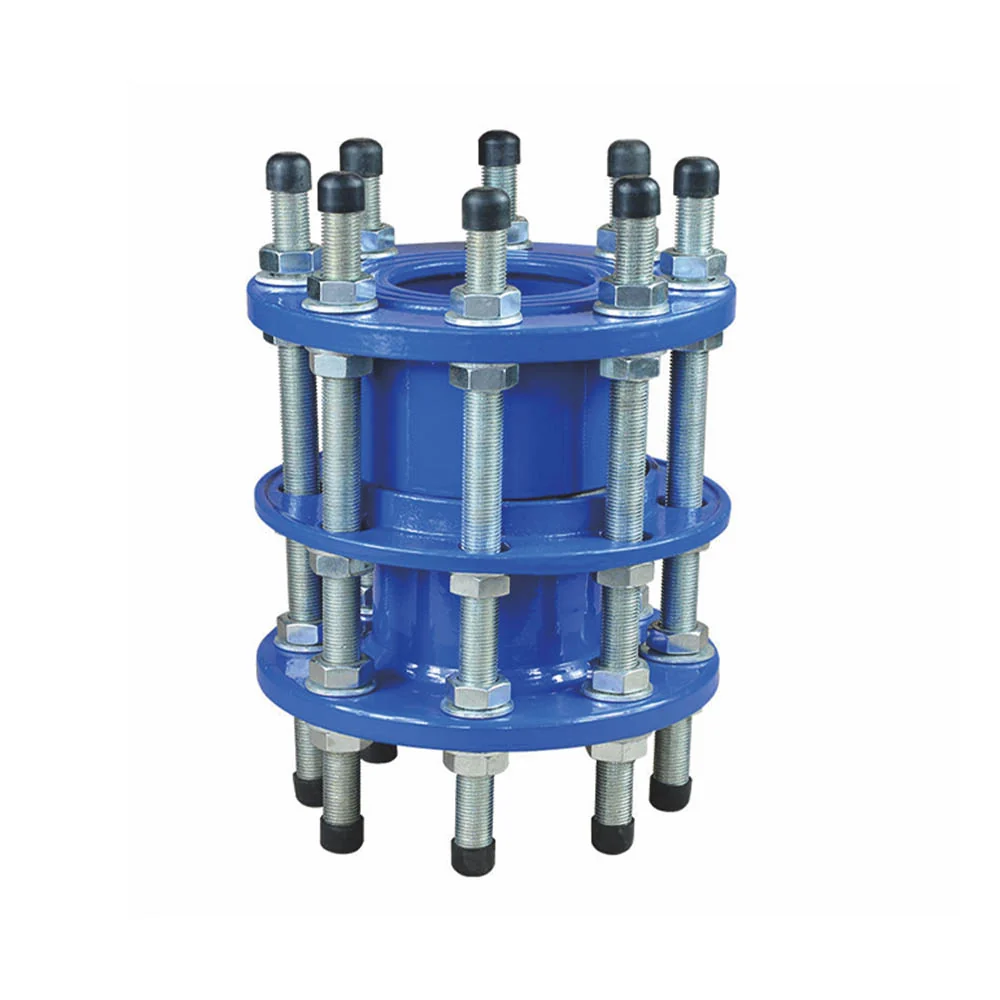
For orientation, the Conflex DI dismantling joint is listed in DN50-DN2000, across PN10, PN16, PN25 and PN40, with EN or ANSI drilling available. An order still has to choose among those alternatives. Repeating the whole catalogue range in a submittal does not identify what will arrive.
Dismantling Joint Installation Starts With Supports and Alignment
Spanners come after setting-out. The pipe and valve first need to sit on the centreline shown in the drawing. The joint will close a planned axial gap; it is a poor—and risky—tool for hauling misaligned flanges toward each other.
This is why the chamber detail needs to show support, not just connection. A telescopic body carrying the weight of a valve or unsupported pipe starts under a load it was never meant to correct.
At installation, the first look is for damaged flange faces, dirty gasket seats or incomplete fasteners. Set the body inside its allowed travel and offer it up without force. Tightening follows the sequence and value issued for this model—not a figure remembered from the last chamber. A couple of reference marks before testing can later show whether anything has shifted.
这 steel VSSJA C2F dismantling joint gives designers another route. Substitution needs more than matching DN: the revised offer must still satisfy the dimensions, pressure, drilling, coating, gasket and material specification already approved for the job.
Dismantling Joints for Valves and Pumps Need Clear Restraint Details
Tie rods may resemble long assembly bolts, but they keep working after commissioning. They control the telescopic body and pass axial thrust across the joint. A drawing that treats them as incidental hardware has not really described its restraint.
Count the rods on the offer and compare their positions with the chamber. Can the nuts still be reached once nearby equipment is installed? Material, protective finish and final setting should all be visible on the approved detail. Anchors and pipe supports remain a separate calculation; restraint inside the joint does not design the rest of the line.
A fresh pair of eyes is a good final test. Hand over the drawing and ask how the valve comes out. Hesitation over the route, available movement or rod setting is a sign that the submittal still needs work.
For supplier review, the chamber drawing and valve data sheet should travel with the DN, pressure duty, drilling, medium and material requirements. Conflex accepts the package through its project enquiry channel. Complete evidence beats a long email that never gets beyond nominal size.
常见问题解答
Q: Is a dismantling joint drawing the same as a catalogue data sheet?
A: No. A data sheet describes the product on its own. The project drawing places that exact version inside the chamber and shows whether it can be installed, connected and later removed.
Q: How much adjustment should a dismantling joint provide?
A: Work backwards from the installation tolerance and the space needed to remove the equipment. Compare that travel with the offered model and the chamber geometry. DN by itself gives no answer.
Q: Can a dismantling joint absorb pipeline expansion?
A: Normally, no. Its adjustment is kept for assembly and maintenance clearance. Continuous thermal movement, vibration or settlement calls for a component designed and rated for those actions.
Q: Is WRAS certification required for dismantling joints in Malawi drinking-water projects?
A: WRAS certification verifies that dismantling-joint bodies and gaskets will not contaminate potable-water. Even if dimensions and flange patterns are correct, missing WRAS approval may create compliance risks for municipal water-supply tenders across Malawi.


 Chinese
 English
 Arabic
 French
 German
 Indonesian
 Italian
 Kazakh
 Kyrgyz
 Portuguese
 Russian
 Spanish
 Swahili
 Uzbek