
项目1
项目2
项目3
项目4
项目5

How Pipe Connection Products Can Support Water Loss Reduction in Tacna and Chimbote, Peru

目录

How Pipe Connection Products Can Support Water Loss Reduction in Tacna and Chimbote, Peru

In Tacna and Chimbote, Peru, the water supply problem is not only about source capacity. Some areas still face incomplete pipe coverage, limited metering, and difficulty identifying where treated water is lost before it reaches users.

When water utilities cannot clearly measure branch flow or manage service connections, supply pressure becomes harder to control. In many older municipal networks, that weak point is often the service connection.

Looking Beyond Pipe Replacement

When a main pipe is still structurally usable, replacing it may not be the first priority. A more efficient starting point is to check how branch lines, household connections, water meters, and small commercial service points are connected to the main pipeline.

Poorly made tapping points can create several problems. They may leak slowly over time. They may be difficult to inspect. They may not support proper meter installation. In some cases, the water company cannot even determine whether the leak is coming from the main pipe, a branch pipe, or a connection where a water meter is not installed.

Therefore, the focus of the solution should not be on adding hardware, but on improving the quality of each connection.

Finding the Weak Points: Branch Lines, Meters, and Valve Chambers

A practical inspection would likely start with three questions.

First, where are new users being connected to existing mains? Second, are water meters installed at stable, standardized connection points? Third, can maintenance teams isolate and inspect service branches without damaging the main pipe?

If the answer is unclear, the network does not need a complicated product mix at this stage. It needs a more reliable way to create and manage branch connections.

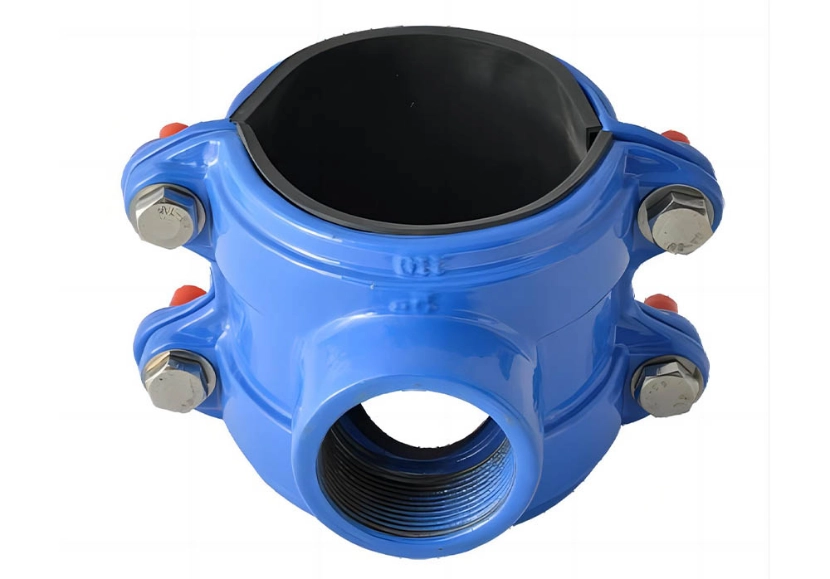
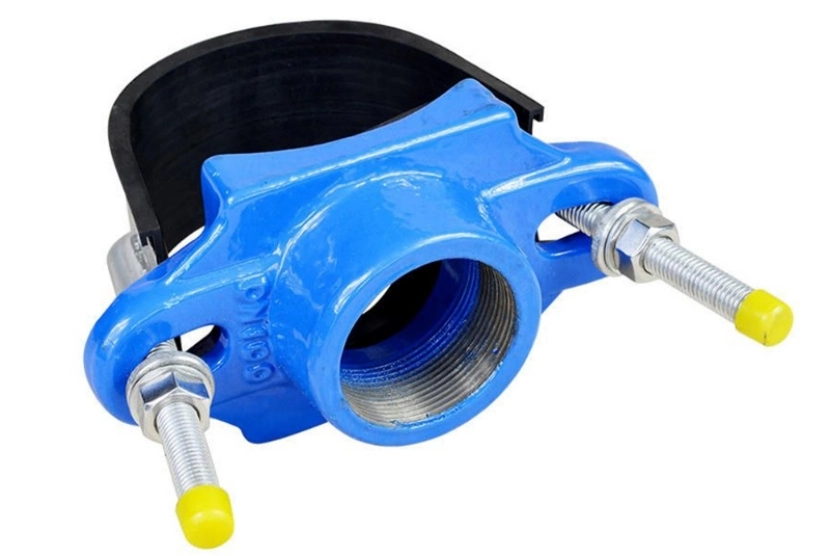
This is where a 马鞍夹 becomes relevant.


HDPE管的马鞍夹

Building a More Controllable Distribution Network

For this type of municipal upgrade, the saddle clamp can be used when a branch pipe, faucet, or water meter needs to be installed on an existing pipeline. In a water loss reduction program, that matters because each branch point becomes easier to standardize.

Instead of irregular field tapping, the utility can use a planned connection method. The clamp is installed around the main pipe, and the branch outlet is created at the required position. This reduces uncertainty for contractors during installation. Water companies can also more clearly document the location of all service connections.

A Practical Upgrade Path for Tacna and Chimbote

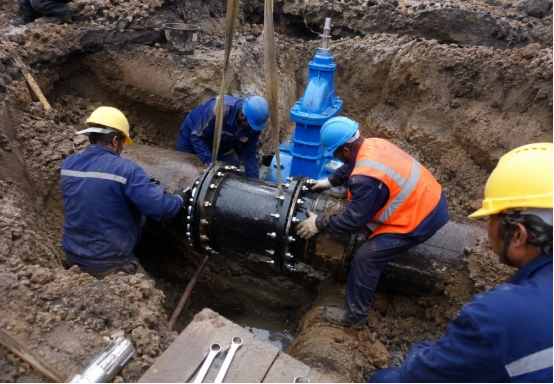
A reasonable upgrade plan would begin in areas with high water loss, low metering coverage, or unstable supply hours. Instead of opening large sections of road, the utility can focus on service branches and meter points first.

Saddle clamps can support more controlled branch installation. For existing unmetered or poorly connected users, the connection point can be rebuilt with a more standardized clamp-based method. Over time, this helps the utility separate real consumption from physical leakage and unauthorized loss.

Saddle clamps are suitable for cities with limited budgets, incomplete piping data, and where service improvements must be made while the network remains operational.

What Municipal Utilities Can Gain from Better Connection Design

Better connection design can help reduce small but repeated losses across the network. It can also make meter installation more consistent, improve maintenance records, and support future district metering work.

The lesson from Tacna and Chimbote is clear: before replacing every pipe, examine the points where the network branches, measures, and serves users. In many water loss projects, the path to better control starts with a better connection point.

As a manufacturer of industrial pipe connection and maintenance products, conflex can support this type of targeted municipal upgrade with saddle clamp solutions designed for practical branch connection and meter installation work.

A practical solution for Tacna and Chimbote would be to build district metering areas step by step. At each district inlet, the utility can install a flow meter, control valve, and pressure monitoring device. Conflex’s 法兰适配器拆卸关节 can support these installations, making the equipment easier to install, inspect, and replace.

结论

This approach does not require replacing the entire water network at once. Instead, it helps the utility improve the most important points first: metering nodes, branch connections, valve chambers, and leakage repair points.

The water supply network becomes more visible, easier to maintain, and more controllable. Water losses can be located more quickly. Emergency repair time can be reduced. Metering and pressure control equipment can be maintained more easily. For local users, these improvements may support more stable supply hours over time.

分享
Facebook
Twitter
LinkedIn

分类

最近的新闻

How Pipe Connection Products Can Support Water Loss Reduction in Tacna and Chimbote, Peru
In Tacna and Chimbote, Peru, the water supply problem is not only about source capacity. Some areas still...
Common Pipe Leak Repair Mistakes That Increase Maintenance Costs
Industry statistics show over 62% of municipal pipeline re-repair cost comes from improper temporary...
管道维修夹具:非洲减少无收益水的实用解决方案
Maoni-kwenye:球墨铸铁管配件选择、安装和维护详细指南
《带鞍座夹的消防水管线维修解决方案》--Conflex
《水下管道泄漏修复夹具》--Conflex
相关新闻
How Pipe Connection Products Can Support Water Loss Reduction in Tacna and Chimbote, Peru
Common Pipe Leak Repair Mistakes That Increase Maintenance Costs
管道维修夹具:非洲减少无收益水的实用解决方案
“水下用管道泄漏修复夹”--Conflex
《带鞍座夹的消防水管线维修解决方案》--Conflex
zh_CNChinese