



项目1
项目2
项目3
项目4
项目5

How Much Axial Travel Do You Need? Expansion & Contraction Basics

目录

How Much Axial Travel Do You Need Expansion & Contraction Basics


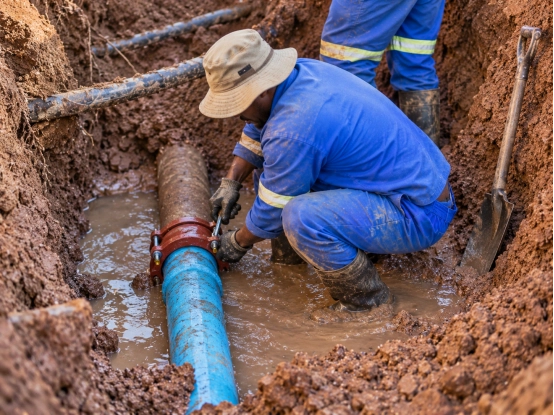
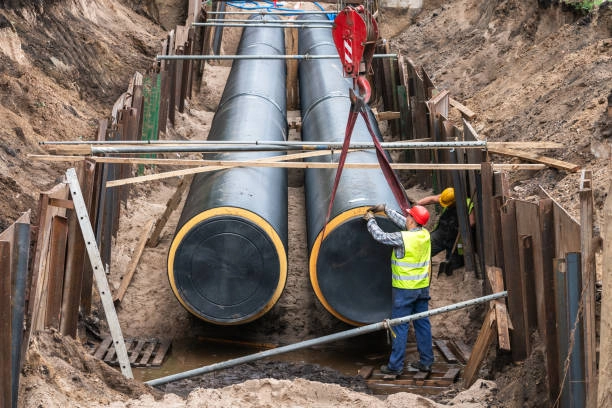
Pipe installation

Axial movement in pipelines is often overlooked until problems arise—leaks, broken flanges, or misaligned valves. So how much axial travel do you actually need? The answer depends on factors like temperature variation, installation conditions, and future maintenance access. In most cases, getting this wrong leads to either costly overdesign or catastrophic failure. Let’s break it down clearly and practically.

Why Axial Travel Matters in Pipeline Systems

Axial movement refers to the linear expansion or contraction of a pipeline segment along its length. It becomes critical in ensuring mechanical integrity and sealing performance over time.

Common Causes of Axial Movement in Pipelines

  • Thermal expansion and contraction: When pipelines heat up or cool down, they naturally expand or shrink. This is especially relevant in systems that carry hot fluids or are exposed to outdoor temperature swings.
  • Installation misalignment: During field assembly, actual pipe lengths may deviate from drawings. Tolerances and fitting errors introduce unintended gaps or overlaps.
  • Ground settlement or structural shifts: Over time, soil movement or building vibration can cause a pipeline to shift from its original position.

Risks of Incorrect Axial Travel Allowance

  • Undersized travel range: If axial movement is restricted, thermal stress gets transferred to flanges and gaskets. That can cause bolt fatigue or premature sealing failure.
  • Oversized travel range: On the other hand, designing for too much movement increases cost and may reduce mechanical stability.
  • Sealing failure: Gaskets depend on proper compression. Axial constraints can distort flanged faces and compromise sealing.

Sources of Axial Movement in Piping Design

热胀冷缩

This is governed by the formula:

ΔL = α × L × ΔT

Where:

  • ΔL: axial expansion
  • α: coefficient of thermal expansion (material specific)
  • L: original pipe length
  • ΔT: temperature change

For example, a 20 meter steel pipe with a ΔT of 40°C could expand around 9.6 mm. Multiply that across multiple segments, and the numbers quickly add up.

Installation Tolerances and Construction Deviations

In real world conditions, even well planned installations rarely align perfectly. Small misalignments across multiple joints result in accumulated axial displacement. Correcting these requires flexibility at connection points.

Maintenance Requirements for Valve Removal or Replacement

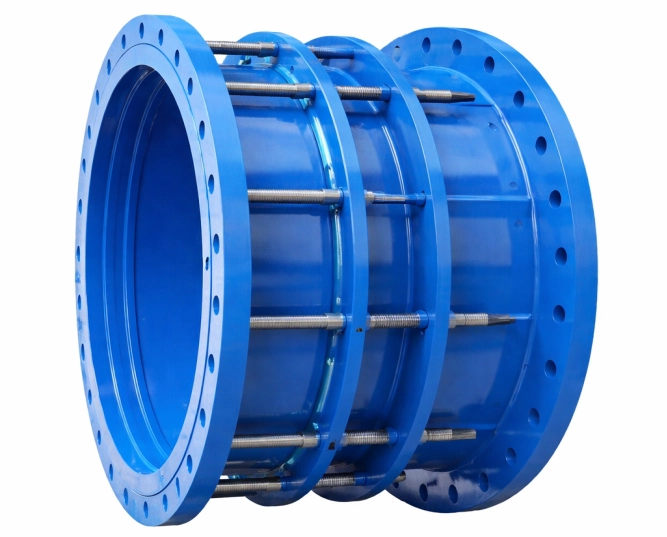
Removable connectors are an important component of piping systems. When maintenance or replacement of critical components in the pipeline (such as valves, water meters, flow meters, etc.) is required, a gap needs to be left between the flanges of these components and the pipe. Without adequate axial room, technicians cannot remove components for service. A 拆卸关节 allows one to shift the pipeline just enough to pull out a valve safely.


钢拆卸接头VSSJA B2F

Estimating Required Axial Travel Range

Practical Approach to Axial Travel Calculation

A simplified calculation is often sufficient:

Axial Travel = α × Effective Length × Max ΔT + Installation Margin

Include:

  • Material’s α (e.g., steel ≈ 12×10⁻⁶/°C)
  • Length of the pipeline run between anchors
  • Expected max temperature differential
  • A small buffer for assembly deviations
Application Type Typical Axial Travel Range
Water utilities 10–30 mm per joint
Municipal piping 20–50 mm
Industrial pipelines Up to 100 mm or more

Higher pressure and temperature demand larger ranges and stronger compensation components.

Importance of Safety Margins in Design

While calculations offer a good estimate, always add contingency for unexpected shifts—especially in older infrastructure or areas prone to seismic activity.

Role of Dismantling Joints in Managing Axial Movement

How Dismantling Joints Provide Adjustable Travel Capacity

When the flange moves towards the flange adapter, the length of the flange enters the interior of the flange adapter, and the overall length of the connector becomes shorter. When the flange moves away from the flange adapter, the length of the flange extends out of the flange adapter, and the overall length of the connector becomes longer. This telescoping mechanism allows installers to pre adjust the joint to suit actual site conditions.

The purpose of using removable connectors is to facilitate the installation and removal of pipe valves and components. These connectors allow for longitudinal adjustment, enabling the valve to be inserted into the desired position in the pipeline.

conflex, a manufacturer specializing in industrial pipeline connection products, offers a range of dismantling joints tailored for water, oil, and gas systems. Their solutions simplify both installation and maintenance while accommodating thermal movement.

Benefits Over Rigid Flange Connections

  • Easier valve replacement without needing to cut pipe
  • Absorbs minor shifts due to thermal expansion without added stress
  • Helps align components during installation, even if as built conditions differ from design

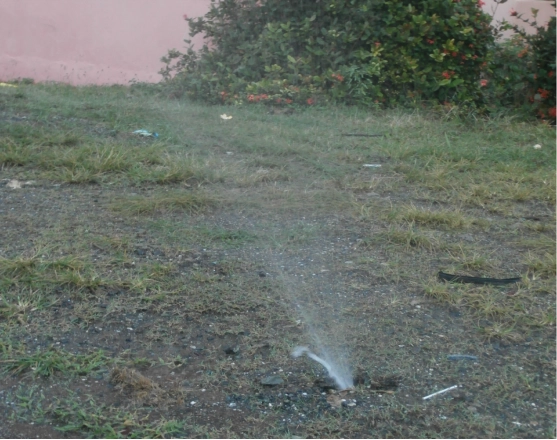
Leaks are the nightmare of any piping system. They can lead to fluid loss, damage to the surrounding environment, and even pose safety hazards. Dismantling joints mitigate this by keeping seal integrity even when the system moves slightly.

Matching Axial Travel Needs with Product Selection

Typical Axial Ranges by Nominal Diameter (DN) and Pressure Rating (PN)

Nominal Diameter (DN) Common Axial Range (mm) Pressure Class (PN)
DN100–DN300 30–50 PN10–PN16
DN400–DN1200 50–100 PN10–PN25

Larger diameters tend to require more axial play due to higher expansion forces and longer segment lengths.

Application Suitability of VSSJA B2F Type Joints

This type offers both dismantling capability and axial compensation. Ideal for:

  • Water treatment systems
  • HVAC piping networks
  • Fire protection systems
  • Process pipelines in industrial facilities

For high demand applications where downtime isn’t an option, Conflex’s VSSJA B2F series provides durability and adjustability built in.

Importance of Reviewing Technical Specifications Before Selection

Visual inspection won’t tell you whether the joint matches your design tolerances or pressure requirements. Always verify specs from the manufacturer datasheet instead of relying on past project experience.

常见问题解答

Q1: What happens if I don’t allow enough axial travel in my pipeline?

Stress will build up at connection points, potentially causing gasket failure or flange distortion.

Q2: Can dismantling joints also handle lateral or angular movement?

They primarily handle axial movement. For lateral or angular displacement, a flexible coupling might be more suitable.

Q3: Is it necessary to install dismantling joints on every valve?

Not always, but they’re highly recommended at critical points like pumps, flow meters, or large isolation valves.

Q4: How do I calculate thermal expansion for plastic pipes?

Use the same formula ΔL = α × L × ΔT, but with higher coefficients. For example, HDPE has an α around 150×10⁻⁶/°C.

Q5: Does Conflex provide custom axial ranges for special projects?

Yes, Conflex can tailor dismantling joints based on your material, pressure class, and length requirements.

分享
Facebook
Twitter
LinkedIn

分类

最近的新闻

How Much Axial Travel Do You Need? Expansion & Contraction Basics
  Axial movement in pipelines is often overlooked until problems arise—leaks, broken flanges, or...
High Pressure Repair Clamps – Everything You Need to Know
  When a gas leak or high-pressure pipe failure happens, time matters a lot. Quick steps are key...
Ultimate Guide to Flange Maintenance: Beat Rust & Corrosion
Common Types of Flange Corrosion in Industrial Systems Flanges serve as key parts to join pipes in systems....
Flanged vs. Threaded Fittings: Pros, Cons, and When to Use Each
Before picking between flanged and threaded fittings for your piping setup, it’s wise to check...
相关新闻
How Much Axial Travel Do You Need Expansion & Contraction Basics
How Much Axial Travel Do You Need? Expansion & Contraction Basics
High Pressure Repair Clamps – Everything You Need to Know
Ultimate Guide to Flange Maintenance Beat Rust & Corrosion
Ultimate Guide to Flange Maintenance: Beat Rust & Corrosion
Flanged vs. Threaded Fittings Pros, Cons, and When to Use Each
Flanged vs. Threaded Fittings: Pros, Cons, and When to Use Each
zh_CNChinese