

Lusaka Water Supply: Practical Pipe Repair Solutions for Utilities
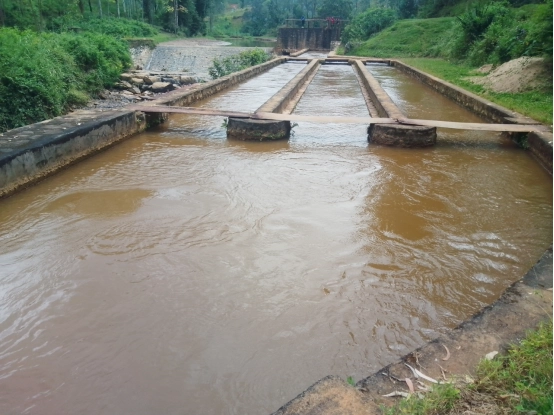
Lusaka’s water teams often work in a difficult cycle: intermittent water supply, high customer expectation for fast service restoration, ageing pipeline networks, unplanned network extensions and multiple mixed pipe materials. The core goal is shorter shutdowns and reliable, repeatable field repairs. Selecting correct WRAS-certified repair clamps, universal couplings and dismantling joints before excavation — and verifying actual pipe outside diameter in trench — is critical for long term leak-free performance for drinking-water distribution networks.
一个 study of Lusaka’s intermittent water supply linked the problem to changing hydrology, unplanned extensions, limited skilled manpower, weak system management and unreliable electricity. Those conditions make a repair-ready connection strategy useful during network renewal.
Why Lusaka’s Intermittent Water Supply Needs Faster Pipe Repairs
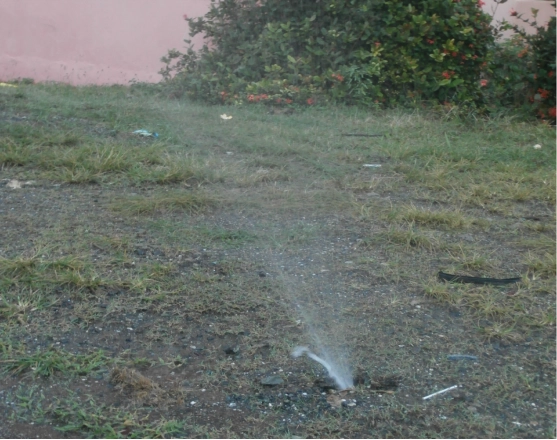
Intermittent supply changes the cost of a leak. When water returns after a low-pressure period, joints and damaged pipe sections can see a different pressure pattern from the one present during inspection. Crews may also have a narrow window to isolate a main, drain the section and complete the work before service is needed again.
For Lusaka projects, separate three jobs: a localized leak repair, a connection between different pipe ends, and planned removal around a valve or pump. A repair clamp, universal coupling and dismantling joint each solve a different job. Keeping those decisions clear helps a utility reduce non-revenue water without treating every failure as a full pipe replacement; pipe repair clamps can support non-revenue-water reduction across African networks.
Which Pipeline Problems Keep Lusaka Water Supply Intermittent?
Mixed materials are common as networks are extended. A project may connect ductile iron, steel, PVC or PE, and a fitting that works on one material may not provide the diameter range or gasket contact needed at the next joint.
Changing pressure can make a small leak look manageable during a dry inspection and much worse when the main is re-pressurized. Crews need the operating pressure and the pressure class of the proposed component before tightening bolts.
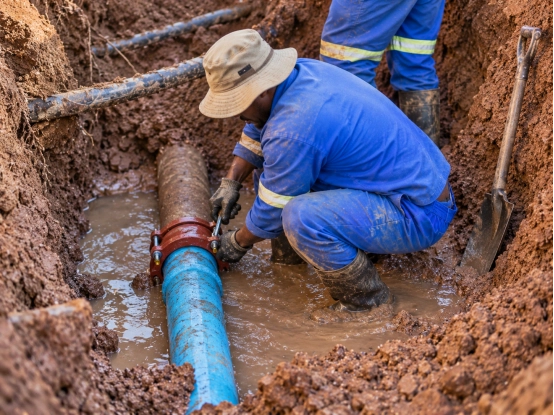
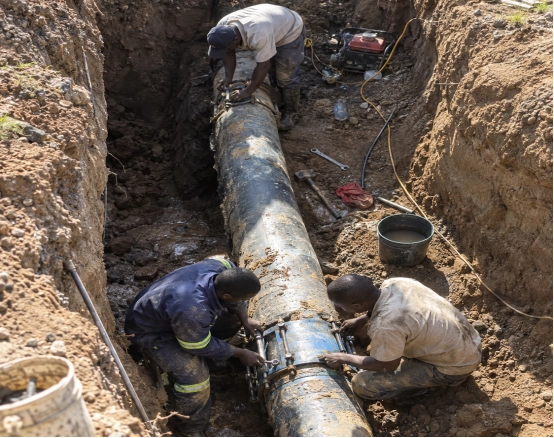
Access is another constraint. A leak under a road, beside a valve chamber or close to a service connection leaves little room for cutting and welding. A mechanical repair option is easier to stage when hot-work permits, generators or welding crews are unavailable.
Unplanned extensions and limited field capacity add delay. If the team has to measure the pipe, search for a special fitting and return after a shutdown has started, the repair window is lost. Standard data sheets, common sizes and clear inspection records help prevent that outcome.
How to Choose Pipe Repair Products for Lusaka Networks
Start with the condition in the trench, then choose the connection type.
| Field condition | Practical connection choice | Checks before ordering | Compliance Note |
| Localized crack, pinhole or circumferential leak | 维修夹具 | Outside diameter, damage length, pressure and gasket condition | Conflex repair clamps are WRAS certified for potable drinking water applications |
| Cut out section or transition between materials | 万向联轴器 | Outside diameter range at both ends, materials, joint gap and axial movement | Conflex universal couplings hold full WRAS approval for potable water networks |
| Valve, pump or meter replacement point | https://www.connectionflexible.com/zh///#comment-92 | Flange drilling, face to face space, pressure class and take out distance | WRAS certified Conflex dismantling joints for safe drinking water service |
For a repair clamp, measure the pipe barrel at several points rather than relying only on nominal DN. Ovality, coatings and corrosion can change the sealing surface. Conflex WRAS certified stainless steel repair clamp connector covers OD25–OD300 for potable water pipelines; always confirm measured outside diameter, working pressure and damage geometry before installation.
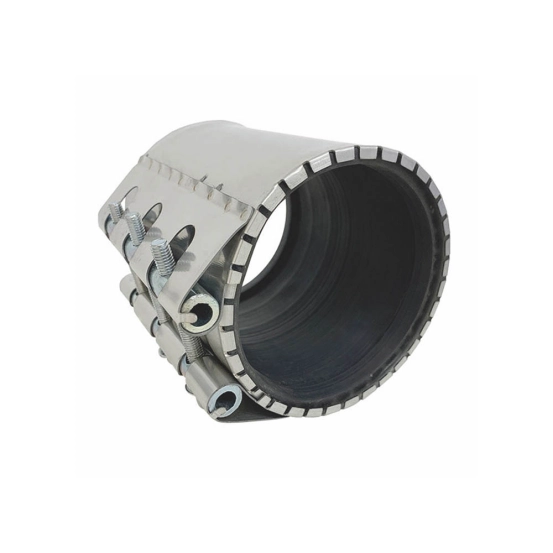
A universal coupling is useful when the repair needs a new pipe section or a connection between unlike materials. The 通用耦合 has a published DN50–DN400 range, but the range alone does not confirm fit. Check the outside diameter at both ends, insertion length and whether the joint needs axial restraint.
A dismantling joint belongs in a planned maintenance detail, not as a substitute for a leak clamp. It creates controlled adjustment space so a valve, pump or meter can be removed without cutting the pipeline. Conflex publishes the VSSJA CF steel dismantling joint for DN65–DN3000, giving project teams a broad starting range for larger facilities.
How to Reduce Shutdown Time During Lusaka Pipeline Repairs
Use this field sequence:
- Confirm isolation and residual pressure.Record closed valves and release trapped water before opening the repair area.
- Measure the outside diameter.Take readings at more than one point where coatings, corrosion or deformation are visible.
- Identify the pipe and joint condition.Note the material and whether pipe ends can move during installation.
- Match the component to the task.Use a clamp for a localized defect, a coupling for a cut-out or mixed-material connection, and a dismantling joint for equipment removal.
- Prepare the sealing surface.Remove loose scale, mud and sharp debris without reducing sound wall thickness.
- Tighten evenly.Follow the supplier’s sequence and tighten around the clamp or coupling in a cross-pattern.
- Test and record.Return the section to service gradually, inspect for seepage, and record the product, measured OD, pressure, photos and installation condition.
That final record turns one emergency repair into usable asset information. Over time, it helps the utility standardize stock and identify sections that need planned rehabilitation rather than repeat patching.
When Should Lusaka Utilities Use Dismantling Joints?
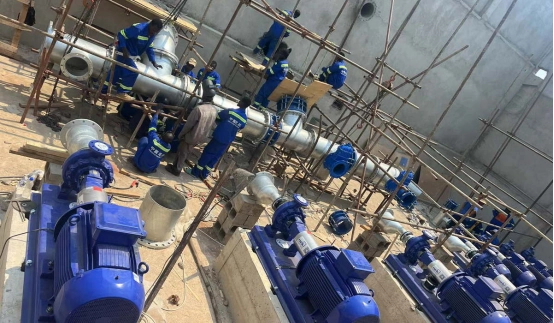
Use a dismantling joint when the future maintenance task is known: a booster pump will be replaced, a valve may need removal, or a flow meter must be serviced in a constrained chamber. The joint gives controlled longitudinal adjustment and a defined take-out space.
That differs from an emergency leak repair. A clamp seals a damaged barrel; a coupling joins prepared pipe ends; a dismantling joint makes equipment removal manageable. Adding the right joint during a pump-station upgrade can prevent a later cutting-and-rewelding exercise. Check the 钢制拆卸接头 against the flange pattern, face-to-face dimension and pressure class.
常见问题解答
These questions cover the details teams confirm before releasing a repair scope.
Can a Repair Clamp Be Used on a Wet or Pressurized Main?
First control isolation and residual pressure. Whether a clamp can be installed in a wet or pressurized condition depends on the clamp design, defect, pipe outside diameter and the utility’s safe-work procedure. Do not assume that a product suitable for a drained main is suitable for live installation.
How Do Utilities Join Different Pipe Materials in Lusaka?
A universal coupling is often considered when cut ends have compatible outside diameters and the pressure, gasket and axial-movement requirements are clear. Confirm both actual ODs, not only nominal sizes, and check whether the connection needs restraint.
What Information Is Needed to Select a Pipe Repair Product?
Prepare pipe material, outside-diameter readings, nominal size, operating or test pressure, damage length, joint type, water service, installation photos and the maximum shutdown window. This lets a supplier review compatibility before the crew reaches the trench.
Are Dismantling Joints Used for Emergency Leak Repairs?
Usually, no. Dismantling joints create removal space around valves, pumps and meters. Repair clamps and couplings address localized leaks, damaged barrels and replacement sections. Keeping those roles separate prevents an emergency scope from carrying unnecessary components.
Are Conflex pipe repair fittings WRAS approved for Lusaka drinking water networks?
Yes. Conflex repair clamps, universal couplings and dismantling joints carry full WRAS certification, verifying material safety for potable drinking water supply. This certification is critical for utilities delivering safe drinking water across Lusaka’s mixed material pipelines.
What Should a Lusaka Water Project Team Do Next?
Before requesting a compatibility review for your Lusaka water project, send a short pipe schedule or clear site photos, measured outside diameters, pipe material, operating pressure class, joint arrangement, repair location, planned shutdown window and destination country. Conflex will assess your site conditions and recommend suitable WRAS certified repair clamps, universal couplings or dismantling joints for your drinking water pipeline repair.
 Chinese
  English
  Arabic
  French
  German
  Indonesian
  Italian
  Kazakh
  Kyrgyz
  Portuguese
  Russian
  Spanish
  Swahili
  Uzbek
Uzbek