



The valve schedule is complete enough to order flanges and still too vague to choose the valve. It gives DN and drilling, yet says nothing about what happens after commissioning. Will the unit stay open until a crew needs to isolate a branch? Or will an operator use it to adjust a bypass? That missing instruction starts the globe valve vs gate valve decision on a Zambian potable-water line. For municipal drinking-water projects in Zambia, specifiers must also confirm WRAS-approved wetted components alongside functional requirements to meet water-quality compliance.
The tag is the right place for the instruction; it travels with the schedule into the supplier’s hands. State whether the valve normally stays open or needs adjustment in service. The engineer can then judge each offer on its pressure loss and chamber fit against the intended task.
Globe valve vs gate valve: define the daily job
For the branch isolator, normal service means open; repair work downstream means closed. A bypass adjusted by an operator may spend considerable time between those positions. These examples help separate the duties. They do not refer to Conflex installations in Zambia.
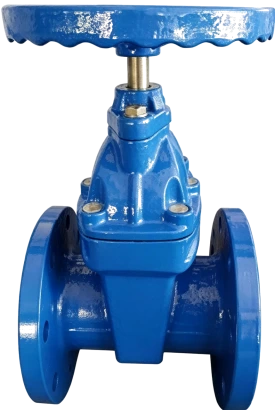
For an isolation position, the WRAS-approved Conflex gate valve may be worth evaluating. A conventional gate withdraws from much of the flow path when open. For a bypass that staff adjust, a globe valve can be considered only after checking the offered trim and allowed range.Conflex gate valve
The drawing symbol says little about the seat or closing element. Record the nameplate before removing an existing unit. For a proposed replacement, ask for a section drawing; the reviewer can compare the actual internal arrangement with the specified duty.
Gate valve for water isolation or manual regulation?
The comparison below is a starting point for conventional designs. It is not a substitute for the documentation of the model offered on a particular job.
|
Decision |
Gate valve |
Globe valve |
Compliance Note |
|
Normal duty |
Fully open or closed for isolation |
Manual regulation and shutoff within design limits |
Select WRAS-approved units for all potable-water service in Zambia |
|
Partly open service |
Generally unsuitable for sustained throttling |
Check trim and verified operating range |
Wetted gaskets and internals shall hold WRAS approval |
|
Fully open resistance |
Generally lower |
Generally higher in a conventional globe flow path |
WRAS certification covers all water-contact parts |
|
Flow direction |
Confirm the particular design |
Use the model’s marked flow direction |
- |
|
Evidence to request |
Isolation and pressure requirements |
Flow range, pressure loss and trim suitability |
Request WRAS approval documentation for tender submission |
Partly closing a gate will restrict flow, but repeated operation at that opening is a different design duty. The narrow passage may bring vibration and wear at the gate and seats. The operator cannot read flow from the number of handwheel turns, because the same opening may pass a different volume when network pressure changes.
The manual globe does not automatically correct downstream pressure. Its handwheel fixes the opening selected by the operator; a shift in demand may still shift pressure. If a fixed pressure target matters, specify an automatic-control function as a separate requirement.
Gate valve pressure loss matters on a water line
An open isolator affects the line for as long as the water is running. Conventional gate valves usually provide a more direct open path than conventional globe valves, but the actual pressure loss is model-specific. Where delivery pressure is limited, put each offer’s technical data into the system calculation; a product category page will not give project values.
For the bypass, decide what flow is needed across the openings staff are likely to choose. The engineer can calculate the resulting pressure drop and check the proposed trim’s limits. Ask the supplier for the model flow coefficient and operating range; DN alone cannot describe flow through a particular seat.
The WRAS-approved Conflex globe valve is listed in the catalog for discussion. Before specifying it for adjustment, request the exact model’s technical submission.
Gate valve installation is a separate decision
Face-to-face length and drilling establish whether the valve fits the pipe. On the chamber section, also show the extended stem, lifted cover and route for moving the body past the spool. This checks whether a fitter can service it later; a heavier offer may call for lifting gear.
The offered globe model’s arrow and instructions determine flow direction. For either type, the pipe must be aligned and supported before the joint is tightened. Bolts used to pull misaligned flanges together can put an unintended load into the installation.
A narrow chamber could justify a separate look at a flanged concentric butterfly valve. Its disc needs room to sweep without striking the adjacent pipe or wall. Confirm shutoff duty and operating torque as well as the space saving; a compact body does not prove equivalent hydraulic service.
Gate valve replacement should follow the required duty
Review the work orders before approving the replacement. Repeated reports of a partly shut gate may mean it has become an improvised flow control. Installing the same type again could leave operators with the same workaround. A globe valve used as a normally open isolator raises the opposite concern: its loss is present throughout routine operation. Consider the maintenance notes together with the pressure calculation.
Identify the duty on the drawing before asking for a quotation: isolation, occasional manual adjustment or continuous control. Send Conflex the marked drawing along with the medium, DN, flow range, pressures, flange details, chamber dimensions and WRAS certification requirements for potable-water service. Those details let us discuss suitable WRAS-approved catalog options; the project team can confirm whether a selected model suits the operator’s task for Zambian water-supply infrastructure.Send Conflex the marked drawing
常见问题解答
Q: Can a gate valve regulate water flow?
A: It restricts flow if left partly shut. For a conventional gate, that is generally an unsuitable way to run the line routinely. Specify a valve intended for repeated regulation and confirm its permitted operating range.
Q: Does a globe valve automatically reduce downstream pressure?
A: No. Turning the handwheel changes the opening; it does not give the valve feedback on downstream pressure. Maintaining a setpoint requires an automatic-control function.
Q: Can equal-DN globe and gate valves be exchanged directly?
A: Equal DN tells you the nominal connection size, not that the valves are interchangeable. Compare the model drawings and pressure-loss data, including length, drilling, direction and rating. Leave room for later service in the chamber.
Q: Why specify WRAS-approved gate or globe valves for Zambian potable-water projects?
A: WRAS approval verifies that valve bodies, internal trim and rubber gaskets will not contaminate drinking water. Many Zambian municipal water tenders require WRAS-approved wetted parts as a compliance prerequisite for potable-water network components.



 Chinese
 English
 Arabic
 French
 German
 Indonesian
 Italian
 Kazakh
 Kyrgyz
 Portuguese
 Russian
 Spanish
 Swahili
 Uzbek