




The obvious ridge on a water-main profile gets attention first. A shallow rise farther along can be harder to notice, especially when the drawing is reduced to fit an A3 sheet. Neither crest should be selected from elevation alone. How the line is filled, pumped and drained changes the air duty at each point. For Tanzania’s potable-water mains, air valves installed at these high-points shall be WRAS-approved for drinking-water contact to satisfy project water-quality compliance.
On the Tanzanian main’s long section, annotate the pump and isolators before choosing valve positions. The crew’s refill sequence may drive one location; pump shutdown may drive another. If flow can reverse, note that too. The drawing should make clear why each proposed crest warrants attention and why a nearby rise does not.

Air valve location starts with the pipe profile
Bring the surveyed profile to a scale that shows small changes in grade. Mark the local crests before deciding which require a valve. If water can enter from either end, trace the operating cases in both directions. It is reasonable to reject a candidate point, provided the review explains why that point does not need its own valve.
On the same profile, show the pumps and major isolators. The reviewer can then test a candidate crest against a normal run, a shutdown and a refill rather than reading the ground line in isolation. A note such as ‘reviewed under pump stop; no separate valve proposed’ is more useful to the next engineer than a symbol left without explanation.
After candidate points are set for review, the Conflex air valve range can be considered. Include the long section with an enquiry. A road-access requirement may place the chamber away from the pipe crown, so show how its branch reaches the selected point.
Air release valve duties change during operation
Imagine a section after repair. It may be empty, with a large volume of air ahead of the water as the crew refills it. Once the main is pressurized, the remaining pockets are usually a different duty from that initial exhaust. Drain the reach and the direction changes: air must enter while water leaves. State which of these events the valve at that location must handle.
“Air valve” is not a complete duty description. Give the designer the rate and pressure for the refill or drain case being checked. Releasing small pockets against line pressure and admitting air into an emptying main are different tasks. An opening chosen for one does not automatically provide enough capacity for the other.
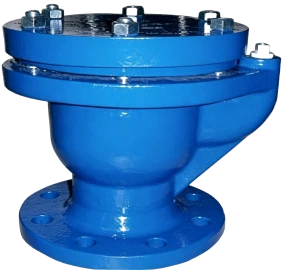
The catalog lists the WRAS-approved Conflex single-orifice air valve. Before assigning a model to a crest, request its technical data. Compare its documented functions and air-flow curves with the operating case in the design.Conflex single orifice air valve
Air valve installation needs a clear air path
An offset chamber creates another piece of pipe to design. Draw the branch from the crown of the main to the valve inlet, with levels at its bends. A sag on that route could hold air short of the valve. Show its bore and length on the section so their effect can be assessed with the air-flow duty.
The chamber should be drawn for the person who will service it. The isolator needs to be reachable and the valve body needs a clear removal path. Put the cover in its lifted position on the sketch: that often reveals an obstruction that the tidy plan view missed.
The inlet also needs scrutiny where the chamber might flood. During drain-down, the valve should admit air, not chamber water. Check the drain against the site’s groundwater level and agree where the air can safely enter. A stock chamber detail cannot answer those site questions by itself.
Air valve sizing follows the operating cases
Main DN identifies the pipe connection, but it cannot size the air passage by itself. For that calculation, use the fill or drain rate, local pressure and allowable differential pressure. Compare those with the curve for the proposed model. Check that its units and reference conditions match the design calculation.
Include pump shutdown in the transient review. An opening that exhausts air quickly during filling may also discharge and close in a way that affects pressure. Use the actual pump and isolation sequence in the analysis. If the offer includes controlled closing, request evidence for that model and event. A large opening is not, on its own, surge protection.
The WRAS-approved Conflex double-orifice air valve is another catalog option. Compare it with the single-orifice offer against the same flow and pressure cases, using model-specific data for both.Conflex double orifice air valve
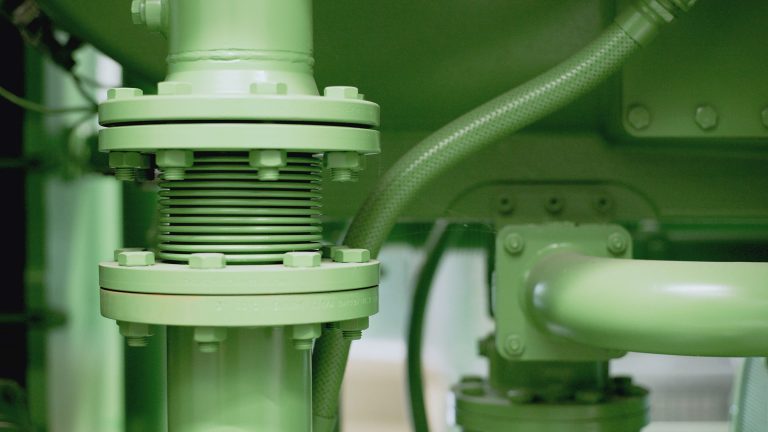
Air valve installation checks before handover
At handover, record the installed branch and isolator as well as the valve location. Observe the refill and inspect again at normal pressure; investigate leakage or discharge that does not match the operating case. Keep the approved model data in the asset record. A quiet valve is not necessarily one that was correctly sized or remains clear of deposits.
For maintenance, follow the utility’s isolation and depressurization procedure, including a check for trapped pressure in the body. At the first inspections, record deposits and any operating problems. Those observations, together with the service history, are a better basis for the next inspection interval than an arbitrary calendar date.
For an enquiry in Tanzania, send Conflex the pipe profile with your proposed air-valve points. Include the fill and drain rates, pressure range, medium, DN, flange drilling, chamber section and WRAS-approval requirements for potable-water service. We can then discuss which catalog data are relevant to the designer’s operating cases and recommend suitable WRAS-approved single-orifice or double-orifice air-valve solutions.send Conflex the profile with your proposed valve points
Preguntas frecuentes
Q: Should every high point have an air valve?
A: Not automatically. Review the local profile and operating cases at each crest; spacing alone cannot establish the duty.
Q: Can an air release valve also protect against vacuum?
A: The question is answered by the model’s air-admission data for the drain-down case. Small-pocket release under line pressure is a separate duty and cannot stand in for that check.
Q: Can the air valve be installed away from the main?
A: An offset chamber can work when the branch maintains a rising path to the valve. Put its dimensions and levels on the drawing, then review capacity, maintenance access and any flood exposure.
Q: Do air valves for Tanzania drinking-water mains need WRAS-approval?
A: Yes. For municipal potable-water projects in Tanzania, air-valve wetted bodies, floats and rubber seals should be WRAS-approved, confirming materials do not leach contaminants into public drinking-water supplies.


 Spanish
 English
 Arabic
 Chinese
 French
 German
 Indonesian
 Italian
 Kazakh
 Kyrgyz
 Portuguese
 Russian
 Swahili
 Uzbek