




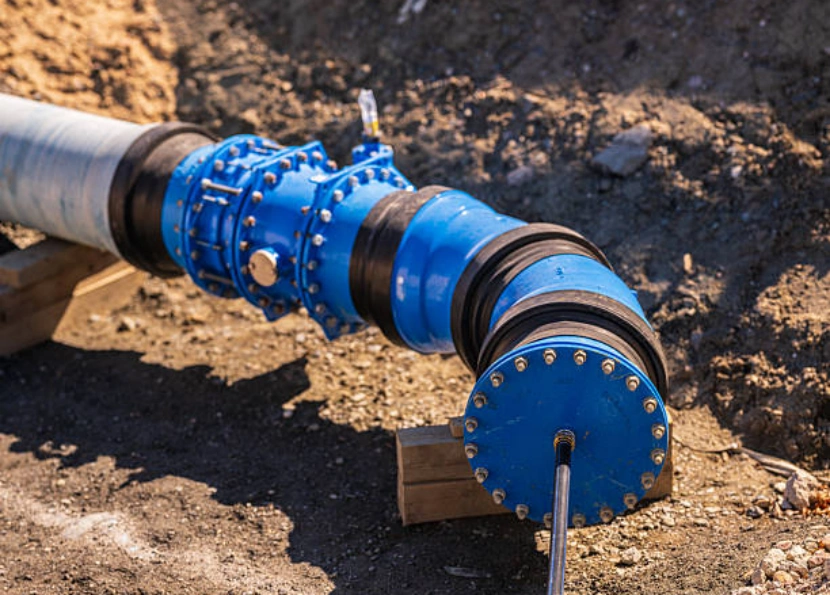
In many old urban water networks, replacing the whole pipe is not always the smarter repair.
A leaking main pipe in an older district of Lima, Peru, is a common type of case. The road is narrow. Traffic cannot stop for long. The water authority may allow only a short shutdown window at night. The pipe has been buried for years, maybe decades. Nobody wants to cut out three meters of pipe before knowing whether the damage is only a small crack.
Why Do Water Pipelines Leak in Old Municipal Networks?
Water pipelines rarely fail for one single reason. In field repair work, the leak often shows up as a wet patch on the road long before anyone sees the pipe. After excavation, the real problem may look smaller than expected.
A small hole. A rusted band around the pipe. A joint that has moved slightly. Sometimes the pipe body is still acceptable, but one weak area has started to leak under pressure.
Pipe Aging, Pressure Changes, and Ground Movement
In Latin American, African, and Southeast Asian cities, many municipal water lines run through mixed ground conditions. Heavy vehicles pass above shallow buried pipes. Road repair happens close to old mains. Soil moves after rain. Pressure rises at night when demand drops.
These details matter.
A cast iron or steel pipe may not break suddenly. It may open slowly at a corroded point. A PVC or PE pipe may leak near a connection if movement has stressed the joint. In a place like coastal Peru, where humidity and soil conditions vary by area, corrosion around old metallic pipes can be hard to predict from drawings alone.
So the repair team should not select a clamp only from the nominal pipe size. That is a common mistake. The actual outside diameter, pipe material, surface condition, and leakage length should be checked on site.
What Should Be Checked Before Choosing a Pipe Repair Product?
A good repair product is chosen after the pipe is seen, measured, and cleaned. Not before.
The damaged area should be exposed far enough to understand the leak shape. A short wet line on the pipe may mean a longer crack under rust or coating. A pinhole may be simple. A broken joint is different. A pipe end connection is different again.
Is the Leak on the Pipe Body or at the Joint?
This is the first practical split.
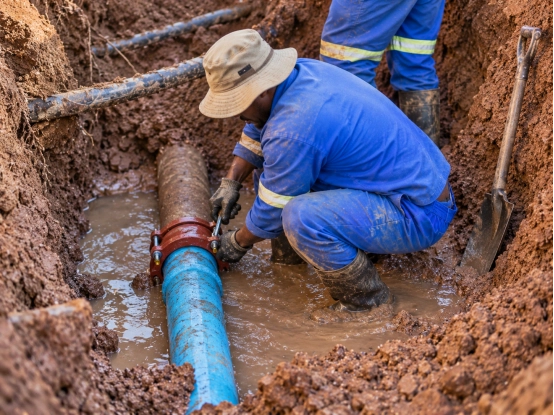
If the leak is on the straight pipe body, a pipe repair clamp is often the direct choice. It covers the damaged area and seals around the pipe. When the pipe wall still has enough strength, this avoids cutting out a pipe section.
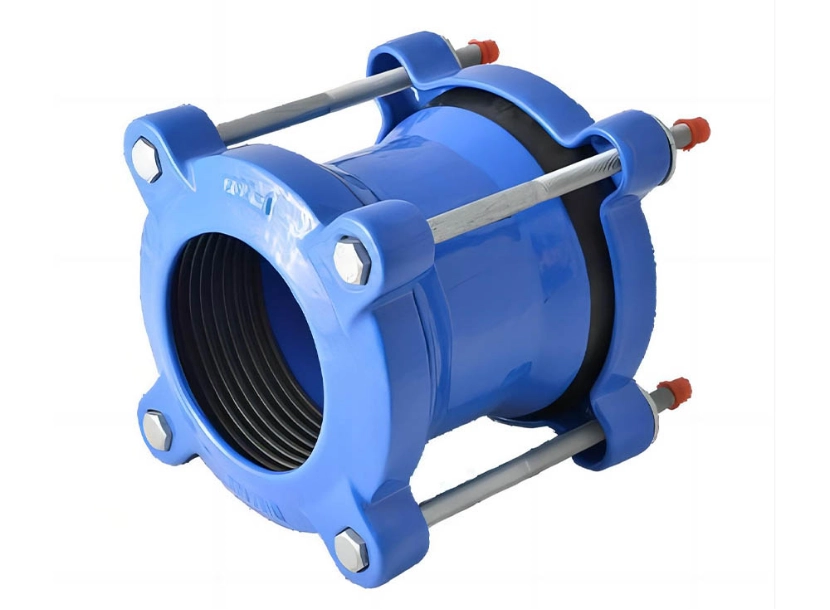
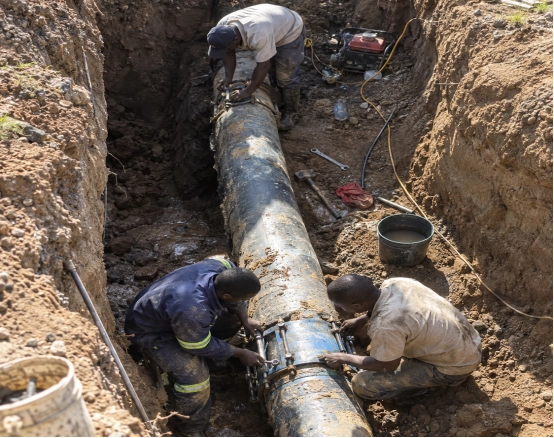
If the leak comes from a joint, or if a short pipe section has already been removed, a pipe coupling may be more suitable. A repair clamp seals a damaged pipe body. A coupling connects pipe ends. They are not the same tool.
This sounds simple, but in real projects the two are often confused during urgent repair. The site team asks for “a clamp” because water is leaking. The better response is to ask where the leak is located.
Which Repair Clamp Is Suitable for a Leaking Water Pipe?
For a localized leak on a water main, a repair clamp is usually the first product to evaluate. It is fast, compact, and does not require removing a long pipe section.
A full-circle repair clamp is useful when the pipe surface is not perfect, or when the damage needs stronger wraparound support. A semi-circle repair clamp may be enough for a smaller and clearer leak, especially when access around the pipe is limited.
Can a Pipe Be Repaired Under Pressure?
Sometimes, yes, but the site condition decides how safe and reasonable that is.
In municipal work, full shutdown is not always possible. Hospitals, apartment blocks, markets, or factories may depend on the line. A repair clamp can reduce downtime because installation is usually faster than pipe replacement. But pressure, flow, pipe material, and leak size must be checked carefully.
A clamp should not be treated like a magic cover. If the pipe is badly crushed, heavily cracked, or structurally weak over a long section, replacement may still be necessary. A proper repair is not about using the least material. It is about not touching more pipe than needed.
When Is a Coupling Better Than a Repair Clamp?
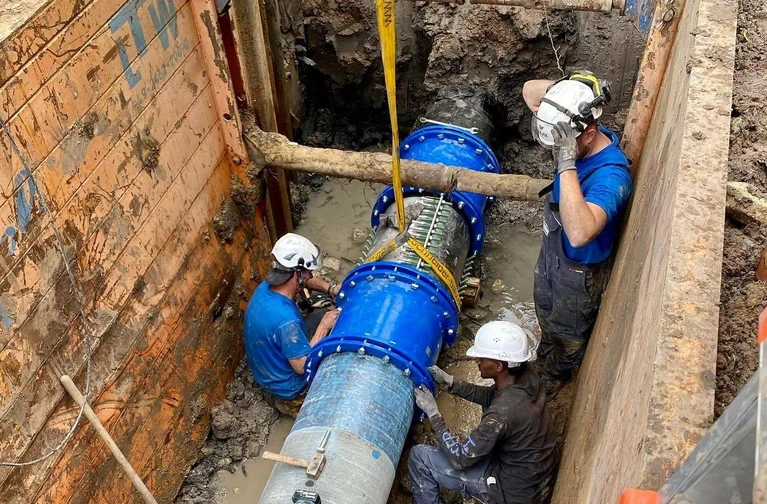
A coupling becomes more useful when two pipe ends need to be connected or when a damaged section has been cut out.
For example, in a Nairobi water maintenance project, a leaking joint near a valve chamber may not be solved well with a repair clamp. The pipe ends may have shifted slightly. The space is tight. The team needs a connection that can tolerate small alignment differences and restore sealing between pipe sections.
In that case, a универсалдык туташтыруу же restrained coupling may be the more sensible selection, depending on pressure and pipe movement risk.
How to Avoid Choosing the Wrong Product?
Measure the pipe outside diameter. Confirm the pipe material. Check whether axial restraint is needed. Look at the installation space around the pipe. These checks take time, but they prevent expensive second repairs.
A product that fits the catalog description but does not fit the site condition is not a solution. It is just another delay.
What If the Project Needs a New Branch Connection?
Not every repair project is only about stopping water loss. Some old network upgrades also need new service connections, meters, or temporary branch lines.
This is where a saddle clamp becomes relevant.
How to Add a Branch Connection Without Replacing the Main Pipe?
A saddle clamp allows a branch connection to be added to an existing main pipe. It can be used when the main line should stay in place and only a controlled outlet is needed.
The key checks are pipe material, outside diameter, branch size, gasket sealing, and working pressure. In small municipal upgrades, this can reduce cutting work and keep the project cleaner.
Again, the product choice follows the site. Not the other way around.
Expected Repair Effect
A well-selected repair clamp, coupling, or saddle clamp can shorten excavation time, reduce shutdown pressure, and avoid unnecessary pipe replacement.
The best result is not dramatic. The road closes for less time. The pipe seals properly. The maintenance team does not need to return next week. The buyer spends money on the actual problem, not on extra cutting, welding, or civil work.
For Conflex, this is where manufacturing experience matters. The product is only one part. The more important part is matching the repair product to the pipe condition, pressure, diameter, and installation space.
Көп суралган суроолор
Q1: Which repair clamp is suitable for water pipe leakage?
A full-circle repair clamp is often used for larger or less stable damaged areas. A semi-circle clamp may suit smaller local leaks.
Q2: Can a leaking municipal pipe be repaired without replacement?
Yes, if the pipe body is still structurally sound and the leakage area is limited. Severe pipe damage may still need replacement.
Q3: What information should buyers provide before selecting a repair clamp?
Pipe material, outside diameter, working pressure, leakage size, leakage position, and site photos are usually needed.
Q4: Is a coupling the same as a repair clamp?
No. A repair clamp seals damage on a pipe body. A coupling connects two pipe ends or repaired pipe sections.
Q5: When should a saddle clamp be used?
A saddle clamp is used when a branch connection, meter connection, or service outlet needs to be added to an existing pipe.
 Kyrgyz
  English
  Arabic
  Chinese
  French
  German
  Indonesian
  Italian
  Kazakh
  Portuguese
  Russian
  Spanish
  Swahili
  Uzbek
Uzbek