





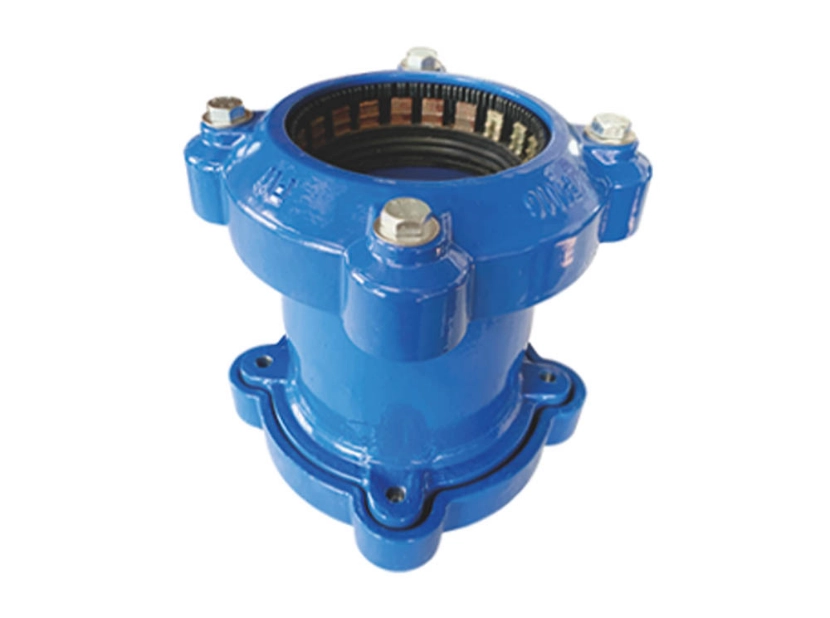
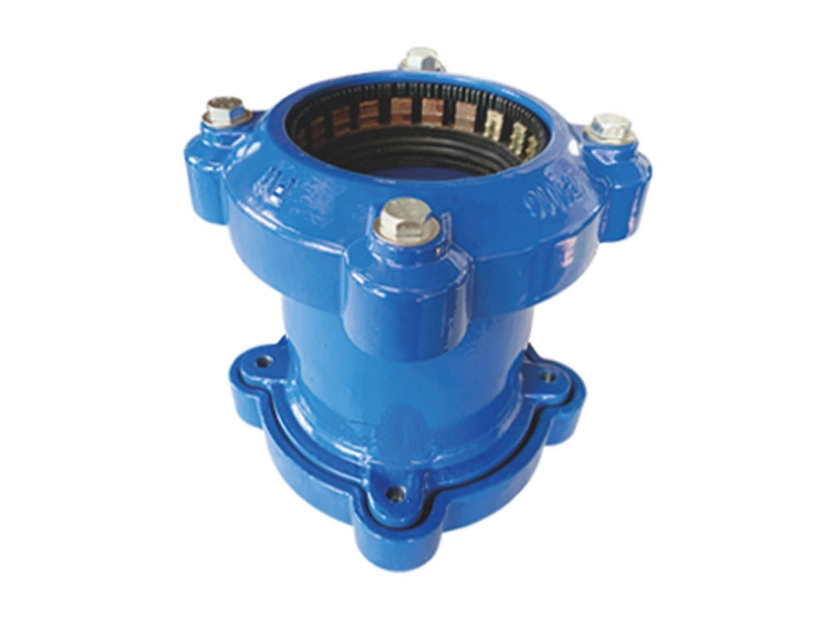
As a professional Chinese water engineering exporter supplying ISO, WRAS & CE certified restrained and unrestrained ductile iron pipe couplings, we often receive project inquiries about axial pipe pullout failures. Many pipeline leakage accidents in municipal water & sewage networks stem from incorrectly choosing unrestrained couplings at high thrust locations, just like the HDPE pipe slip failure on the East Africa water main project.
Sealing and restraint are different jobs. The gasket keeps the water inside. It does not necessarily stop the pipe from moving along its axis. When pressure surges, thermal movement or poorly supported fittings create axial force, an apparently sound joint may begin to slip. The result is often a small leak, followed by pipe pullout and a much larger repair.
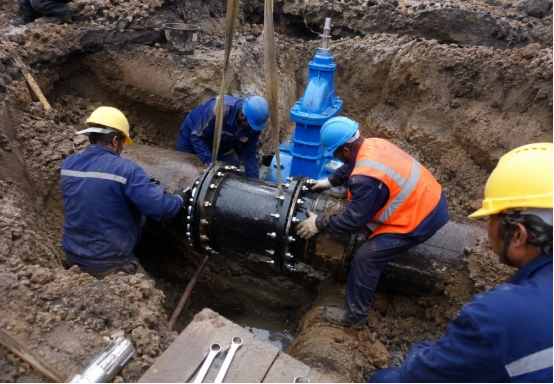
Consider a typical municipal water project in East Africa: an aging ductile iron main was extended using a new HDPE pipeline. A standard unrestrained coupling connected the two materials near a valve chamber. The line also included a bend and ran down a mild slope.
Installation looked acceptable. The joint stayed dry during the initial pressure test.
Several weeks later, operators noticed water collecting beside the chamber after the pumps had cycled repeatedly. The HDPE pipe had moved a few millimeters. That was enough to reduce gasket contact. Continued movement eventually pulled the pipe farther out of the coupling, interrupting supply to the surrounding district.
The coupling had not simply “failed.” It had been asked to resist a load it was not designed to carry.
Why Did the Pipe Pull Out of the Coupling?
The visible leak was only the final symptom. The more useful question was why the pipe had been moving at all.
Where did the axial force come from?
Several conditions were acting on the connection. Pump starts and stops caused regular pressure changes, while a nearby bend generated thrust whenever the line was pressurized.
The sloping route encouraged movement toward the valve chamber, and the HDPE expanded slightly under internal pressure. Backfill around the new section had not fully consolidated, while the original thrust restraint was designed for the older pipe arrangement.
Why was the unrestrained coupling insufficient?
An unrestrained coupling seals the annular space between the pipe and coupling body. It can also accommodate limited misalignment and movement, which is useful in many buried pipelines.
Its gasket, however, should not be treated as a pipe anchor.
In this case, there was no reliable external restraint close to the transition. The pipe could slide while the gasket remained compressed. Once the insertion depth became too short, leakage was almost unavoidable.
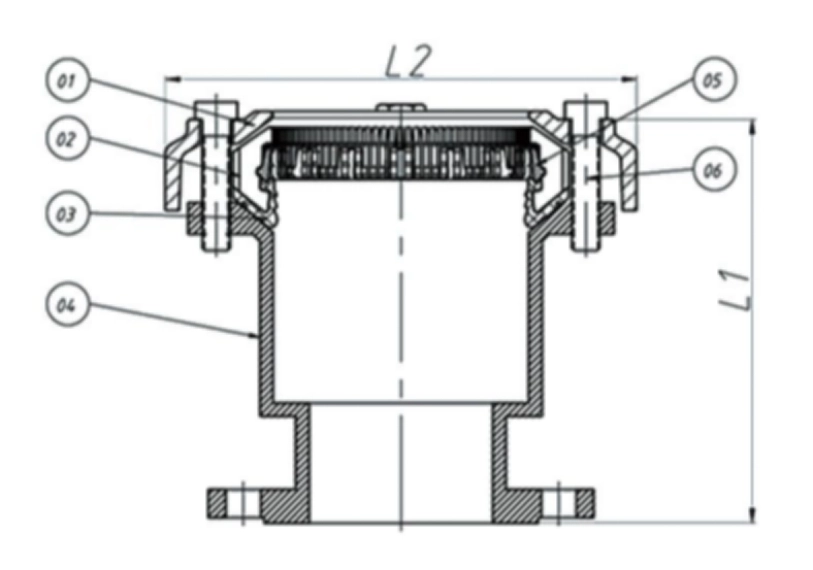
What Is the Difference Between Restrained and Unrestrained Pipe Couplings?
Both coupling types can create a pressure-tight mechanical joint. The important difference is how they respond when the pipe tries to move axially.
| Selection factor | Restrained coupling | Unrestrained coupling |
| Primary function | Seals the joint and resists axial pipe movement | Seals the joint while permitting controlled movement |
| Axial resistance | Supplied by an integrated grip or restraint mechanism | Supplied by anchors, thrust blocks or other external restraint |
| Typical use | PE pipelines, slopes, exposed installations and high-thrust points | Straight buried lines with adequate external restraint |
| Pipe movement | Limited | More movement can usually be accommodated |
| Installation sensitivity | Requires careful checking of pipe OD, surface and engagement | Requires correct alignment and gasket compression |
| Relative cost | Usually higher | Usually lower |
| Main risk | Grip may be unsuitable for the pipe material | Pipe pullout if external restraint is inadequate |
| Certification | ISO, WRAS & CE approved for PN10/PN16 | ISO certified, partial WRAS & CE available |
| Applicable PN Grade | PN10 & PN16 full series | Mainly PN10, PN16 optional |
Unrestrained couplings are not an inferior option. On a straight, well-anchored buried main, they may be the better choice. They are simpler, economical and tolerant of moderate movement.
Problems begin when price or nominal diameter becomes the only selection criterion.
When Is Axial Restraint Required?
A restrained coupling deserves serious consideration when the joint itself must prevent pipe pullout. Typical conditions include pressurized flexible pipelines, connections between new and existing pipes, and locations near bends, tees, reducers, valves or end caps. Sloping, exposed, suspended and bridge-mounted pipelines may also require restraint.
Additional risks include weak soil, disturbed backfill, frequent pump cycling, water hammer and limited space for conventional thrust blocks. Restraint becomes especially important when joint separation could cause major service disruption.
How Was the Correct Coupling Solution Selected?
The repair team needed a joint that could accommodate different pipe materials and resist axial movement. A restrained universal coupling was therefore a more appropriate option than another standard coupling.
Product selection still required several field checks. “Universal” does not mean suitable for every diameter, pressure or pipe surface.
Step 1: Verify the operating conditions
Step 2: Match the coupling to the failure risk
Step 3: Control the installation
The selected coupling needed an OD range covering both pipes, a pressure rating suitable for the test condition and a gripping system approved for HDPE.
The gasket material also had to be suitable for potable water service. For projects using oil, gas or chemicals, media compatibility would need a separate review.
Not every joint should be locked rigidly. Where thermal movement must be absorbed, restraint points and flexible sections need to be planned as a system.
What Results Can the Correct Axial Restraint Deliver?
After the joint was replaced and the surrounding restraint arrangement corrected, the pipe remained stable during pump cycling and pressure testing.
The main benefit was not merely a dry connection. The repair removed the movement that had caused the leak. It also reduced the likelihood of another excavation beside the valve chamber—a costly job in a road carrying buses, motorcycles and market traffic throughout the day.
How Should Engineers Make the Final Choice?
Use an unrestrained coupling where external restraint is reliable and controlled movement is desirable. Specify a restrained coupling when the joint must resist pullout or axial thrust.
Pipe material, actual OD, pressure and layout should decide the matter. Not habit.
Send Conflex the pipe materials, actual outside diameters, working pressure and application details to identify a suitable coupling solution.
FAQ
Q: Can an unrestrained coupling be used on HDPE pipe?
Yes, provided the pipe is restrained by an approved external system and the coupling is compatible with the actual HDPE outside diameter.
Q: Does a restrained coupling eliminate the need for thrust blocks?
Not automatically. Bends, valves and tees still require a system-level thrust assessment. Local codes may also require conventional anchoring.
Q: Can the gasket prevent pipe pullout?
A standard sealing gasket should not be treated as an axial restraint unless the manufacturer specifically rates the complete coupling for that function.


 English
  Arabic
  Chinese
  French
  German
  Indonesian
  Italian
  Kazakh
  Kyrgyz
  Portuguese
  Russian
  Spanish
  Swahili
  Uzbek
Uzbek