




Unplanned leakage failures frequently occur on Johannesburg municipal buried water mains without prearranged construction windows. Full zone water shutdown for pipeline maintenance often disrupts local residents, commercial stores and public medical facilities.
Live under pressure water pipeline repair technology effectively minimizes social and economic disruption, yet stable sealing performance can only be guaranteed after fully confirming pipeline damage type, residual pipe wall structural condition, operating water pressure and matching stainless steel repair clamp specifications. Improperly sized repair clamps installed on severely thinned pipe walls will trigger secondary leakage failure adjacent to the original defect.
Why Is Under Pressure Pipe Repair Important in Johannesburg?
Johannesburg’s network contains steel, ductile iron, asbestos cement, PVC, and newer PE pipe. They do not fail in the same way. Steel pits. Cast pipe cracks. Older joints move. Ground settlement and pressure changes add stress.
A small leak can wash away bedding below a pipe. Once support is lost, the damage can spread. Full replacement may also interrupt traffic, businesses, clinics, and apartment blocks.
A local repair is sensible when the surrounding pipe remains sound. It stops water loss and buys time for planned replacement. It is not a cure for a badly deteriorated main.
What Must Be Checked Before Repairing a Pressurised Water Pipe?
The decision should be made at the excavation, not from an old drawing. Records help, but field measurements decide whether a product will seal.
Identify the Type and Extent of Damage
A corrosion pinhole is different from a longitudinal split. A leaking joint is another problem again.
Expose enough pipe to reveal the full defect. Mud and scale often hide the true crack length. Check for dents, ovality, soft wall, and previous repairs nearby.
A repair clamp suits a local defect when sound pipe remains around it. A collapsed section, severe wall loss, or major misalignment usually needs replacement or structural repair.
Confirm the Pipe and Operating Conditions
Measure the actual outside diameter. Nominal diameter is not enough on an older main; coatings, corrosion, and manufacturing tolerances can change the effective size.
Record the pipe material, pressure, water temperature, leak length, and installation clearance. A clamp may be impossible to install beside a thrust block or another buried service.
Pressure should be checked from a gauge where possible. Assumed network pressure is a weak basis for live work.
Which Methods Can Be Used for Under Pressure Water Pipe Repair?
The method should match the failure. There is no single product for every leak.
Full Circle Repair Clamps for Localised Leaks
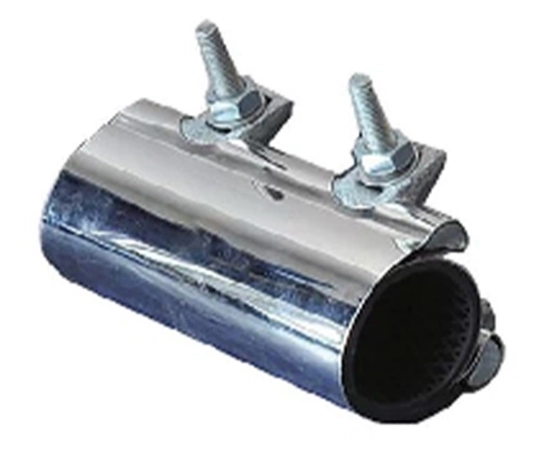
A full circle stainless steel repair clamp is commonly used for pinholes, short cracks, and local corrosion. Its rubber gasket wraps around the pipe and compresses over the damaged area as the bolts are tightened.
The gasket must extend onto sound pipe beyond the leak. A narrow clamp may seal a circumferential crack for a while but provide too little support.
Conflex repair clamps can be considered when the outside diameter, pressure rating, gasket material, and clamp width match the site. Pipe size alone is not enough.
Split Sleeves and Half Collars for Larger Damage
Longer cracks or broad corrosion patches may need a multi-band clamp, split sleeve, or half collar. These products spread load over a wider area and are easier to position around large mains.
A wider sleeve can contain a leak, but it cannot rebuild a pipe wall that has lost most of its strength. If the pipe deforms during tightening or shows widespread deterioration, replacement is the safer judgement.
Couplings and Flange Adaptors for Isolated Pipe Sections
Some defects cannot be sealed in place. A failed joint, damaged pipe end, or displaced section may need to be cut out after local isolation.
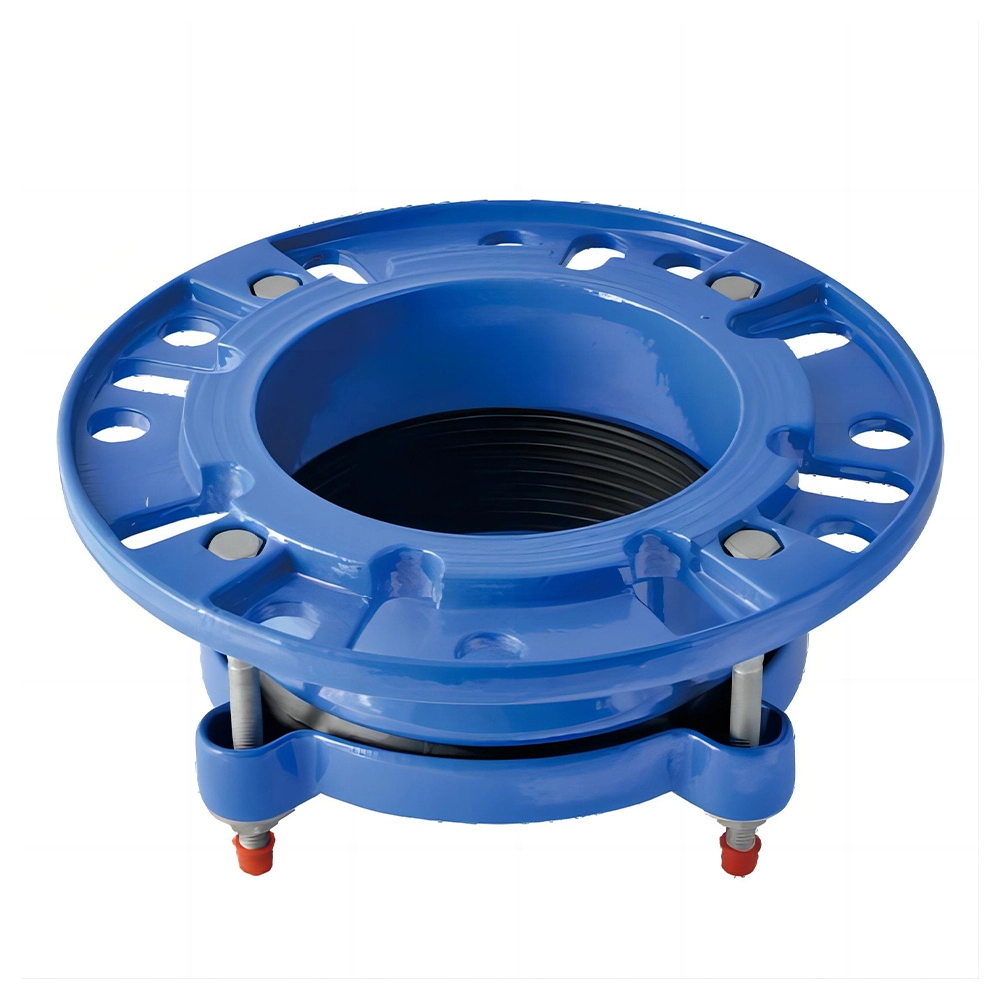
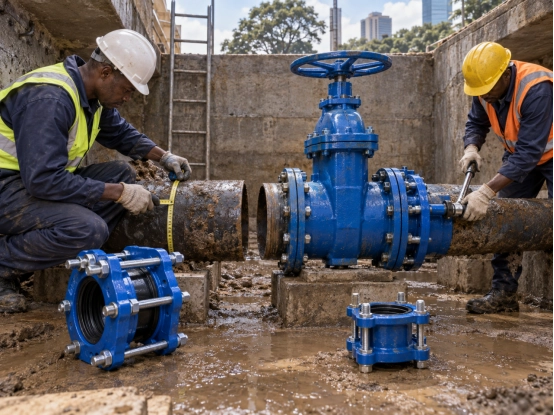
Restrained universal couplings can reconnect cut replacement pipe segments with inconsistent outer diameters within the product adjustable range. The universal flange adaptor (Figure 4) is specially designed for pipeline connection with flanged equipment including water valves and booster pumps, which solves the misalignment problem of mismatched flange standards during live pipeline reconstruction. Conflex couplings and flange adaptors fit this stage because they solve the connection problem after damaged pipe is removed.
These products normally require isolation. They are not direct leak sealing devices.
How Do You Choose the Right Repair Product?
Selection comes down to accurate measurements and one difficult question: is the remaining pipe strong enough to carry the load?
| Pipe condition | Suitable solution | Key selection factors | Important limitation |
| Pinhole or short leak | Full circle repair clamp | Actual OD, pressure, gasket, width | Needs sound pipe around the defect |
| Long crack or broad corrosion | Multi-band clamp or split sleeve | Damage length, wall condition, clearance | Cannot restore a collapsed pipe |
| Removed pipe section | Universal coupling | OD range, gap, material, restraint | Usually requires isolation |
| Connection to flanged equipment | Flange adaptor | Flange standard, pressure class, pipe OD | Not for mid-pipe leak sealing |
| Valve or pump replacement | Dismantling joint | Axial adjustment, restraint, flange size | Requires correct thrust control |
A useful product enquiry should include pipe material, actual outside diameter, working pressure, defect length, and photographs. This allows Conflex or another technical supplier to recommend a clamp width, coupling range, or adaptor arrangement based on the repair—not a catalogue label.
How Can Repair Crews Work Safely on a Pressurised Pipeline?
Water pressure is obvious. Unstable excavations, sudden valve movement, hidden services, and washed out soil are often greater risks.
Control Pressure and Water Release
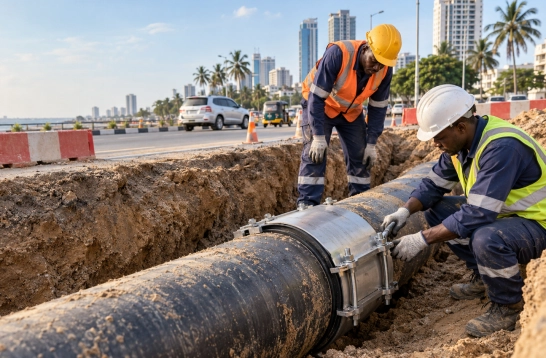
Engineers shall appropriately reduce pipeline operating pressure within the allowable range of the municipal water network before live repair. Even partial pressure reduction can significantly weaken water jet impact force at leakage points, simplify centering and installation of full circle stainless steel repair clamps, and avoid gasket displacement during bolt tightening.
Valves should be operated slowly to avoid water hammer. Stay out of the direct leak path. Tighten bolts evenly and in stages; pulling one side down hard can twist the gasket.
Repressurise gradually and watch the repair as pressure rises.
Secure the Excavation and Installation Area
Trench support, safe access, pumping, traffic control, and underground service checks should be in place before work begins.
Clean the pipe surface without damaging it. Remove loose rust, stones, and sharp coating edges so the gasket sits flat. Check clamp position, bolt tightness, and leakage once pressure stabilises.
What Results Can a Correctly Selected Repair Deliver?
A well matched repair can stop water loss, restore pressure, reduce the shutdown area, and avoid replacing a full pipe length during an emergency callout.
The location should still be recorded and monitored. Repeated failures along the same main usually indicate a system problem. Clamps may keep the network operating, but the pipe still belongs on a replacement plan.
FAQ
Q: Can a repair clamp be installed while the pipe is fully pressurised?
Full circle stainless steel repair clamps support live under pressure installation under specific working conditions, subject to leakage hole size, pipeline operating pressure, residual pipe wall structural integrity, clamp structural design and on-site safety environment. Controlled partial pressure reduction is strongly recommended to reduce construction risks and improve long-term sealing stability.
Q: How wide should a repair clamp be?
It should extend beyond the defect onto sound pipe. Longer cracks and broad corrosion need more gasket coverage and often a wider clamp.
Q: Can one clamp fit steel, ductile iron, and PVC pipe?
Some designs cover several materials, but outside diameter, surface condition, gasket compatibility, and pressure rating still need checking.
Q: When should the damaged pipe section be replaced?
Replacement is usually better when the pipe is collapsed, badly deformed, severely thinned, misaligned, or failing repeatedly.


 English
  Arabic
  Chinese
  French
  German
  Indonesian
  Italian
  Kazakh
  Kyrgyz
  Portuguese
  Russian
  Spanish
  Swahili
  Uzbek
Uzbek