
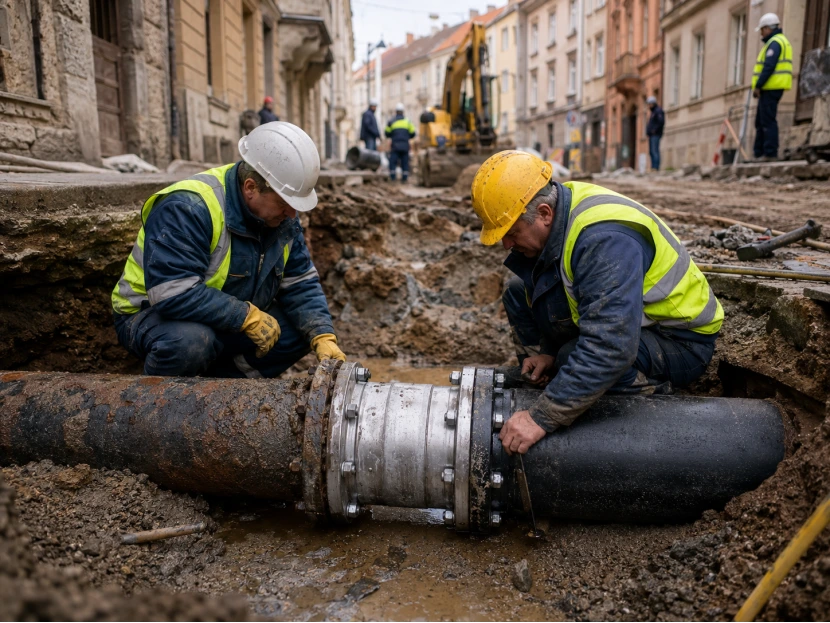
Eastern Europe’s water utilities are facing a tough, everyday challenge: aging underground water mains are failing faster than full replacement budgets can handle.
Old pipelines suffer from constant leaks, internal rust, corrosion and groundwater contamination. Meanwhile, municipal budgets are tight, and full road excavation & complete pipe replacement is expensive, time-consuming, and disruptive to traffic and residents.
Using reliable pipe couplings and WRAS-approved potable water fittings is the most cost-effective solution. It restores pipeline performance, extends service life for decades, and fully complies with EU drinking water standards — no need to dig up entire streets.
The Challenge of Aging Water Mains in Eastern Europe
Across the region, pipes from the mid-20th century still carry most city water. These systems were built for another time. Cast iron and bare steel were common then. In cities from Warsaw to Bucharest, old pipes still work under growing strain. This leads to more leaks, pressure drops, and possible dirt from soil or groundwater. Many towns report that up to 30% of treated water is lost before it reaches homes.
Common Issues in Old Water Main Systems
Old networks face several clear problems:
Corrosion eats away at cast iron or steel walls year after year.
Joint failures happen when soil shifts or pressure inside the pipe changes fast.
Integration difficulties show up when new ductile iron or PVC must connect to old metal lines.
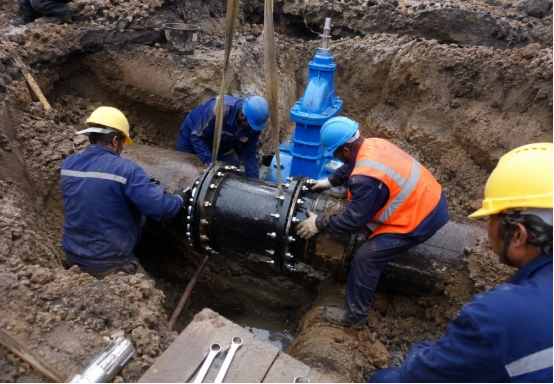
The outcome is a mixed system that needs flexible joints to link different materials without losing strength. Rehab plans mix new sections with targeted fixes. Utilities use couplings to join old and new pipe fast instead of changing whole runs. This cuts digging time and reduces trouble in crowded streets where open trenches cost a lot and block traffic.
Why Pipe Couplings Are Indispensable for Water Main Repair
Our pipe couplings create strong, leak-tight connections between old and new pipes.
They accommodate minor ground settlement and pipe misalignment, maintaining a perfect seal even when pipe ends are not perfectly aligned.
For emergency water main breakdowns, fast coupling installation cuts repair time from days down to just hours. Another key benefit: couplings are fully demountable, allowing easy inspection, maintenance or pipe replacement later — something welded joints cannot offer.
Couplings vs Traditional Welding & Flanging
Compared with welding and flanging, pipe couplings bring clear onsite advantages:
No hot work permit required, simplifying site safety management
Installed with standard hand tools only, no heavy welding equipment
Lower labour cost and faster project progress
Easy to remove and reinstall for future network upgrades
Key Requirements for Potable Water Applications
Not every coupling meets the rules for drinking water. Parts must pass strict hygiene and material tests to keep water safe from the plant all the way to the tap.
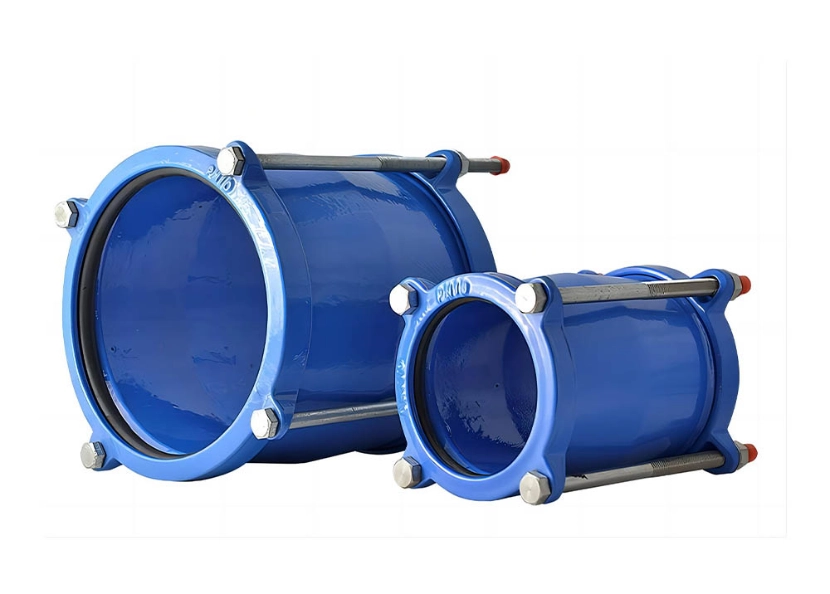
Potable Water Grade Requirements & EU Compliance
Not all pipe couplings are safe for drinking water supply.
Any component touching potable water must pass strict hygiene, material and toxicology tests to prevent chemical contamination and bacterial growth. The fittings also need excellent resistance to corrosion, scaling and pressure cycling for long-term municipal network use.
WRAS Approval & European Market Recognition
WRAS approved pipe couplings and fittings are widely trusted across EU markets. The WRAS certificate proves products meet strict UK drinking water standards, recognised by most European authorities for public water project acceptance.
EU Drinking Water Directive Compliance
All water infrastructure components sold in the EU must comply with the EU Drinking Water Directive. Raw materials and finished products must be tested by certified laboratories, with complete documentation ready for project audits and EU fund application reviews.
How Conflex Maintains Full Compliance
Conflex adopts fully certified raw materials that meet EU potable water regulations. Every production batch undergoes strict quality inspection on dimension, sealing performance and corrosion resistance. Full traceable certification documents are supplied with every shipment for onsite inspection and project approval.
How to Choose the Right Coupling for Water Main Rehabilitation
Selecting suitable couplings is not only about pipe diameter matching. You need to evaluate pipe material, working pressure, site environment and long-term maintenance plans.
Key Selection Factors
Material compatibility: Fits cast iron, bare steel, ductile iron and PVC pipes
Pressure rating: Suitable for standard municipal water lines at 10–16 bar
Site adaptability: Fast assembly for narrow trenches, wet ground and limited working space
Proper selection greatly reduces leakage risk and simplifies construction, especially under busy roads and densely buried utility corridors.
Flexible vs Rigid Couplings: Where to Use
Flexible couplings absorb vibration from water pumps and road traffic, and allow small angular deviation between pipe ends. Ideal for partial replacement of corroded sections where slight pipe misalignment exists.
Rigid couplings provide high structural stability, limiting pipe movement. They are best used in valve chambers, anchor blocks and sections with frequent water pressure fluctuation.
Conflex Customised Solutions for Eastern Europe
Eastern Europe’s legacy water networks feature mixed pipe standards: metric steel pipes in Poland, and old imperial size pipes still widely used in Balkan regions.
Conflex tailor-makes pipe couplings compatible with both metric and imperial legacy pipe sizes. The sealing structure remains stable and leak-proof through extreme seasonal temperature changes, from freezing winters to hot summers.
Boost Project Efficiency & Reduce Network Downtime
Quick-fit coupling design minimises excavation clearance requirements and shortens construction time. Less road closure, shorter water supply interruption, and lower treated water loss — delivering clear economic benefits for water utilities and contractors.
At the same time, corrosion-resistant coupling materials effectively stop recurring leaks, extending the service life of existing water mains. For Eastern European cities with limited budgets and ageing infrastructure, targeted rehabilitation with quality couplings is the most practical alternative to full pipeline replacement.
FAQ
Q1: Why are WRAS approved fittings important for European water projects?
A WRAS approval confirms products meet strict drinking water safety standards, widely accepted across the EU for public water project inspection and approval.
Q2: What is the difference between flexible and rigid couplings?
Flexible couplings absorb vibration and pipe misalignment; rigid couplings fix joint position and are used in valve chambers and anchor points where pipe movement must be controlled.
Q3: Why use dedicated potable water fittings for municipal supply?
Certified potable water grade materials avoid contamination, resist corrosion and bacteria growth, ensuring long-term safe water delivery.
Q4: What key points should we check when selecting pipe couplings?
Focus on material compatibility, pressure rating, onsite installation conditions and ease of future maintenance.
Q5: Does EU drinking water compliance affect project approval?
Yes. All wading parts must pass EU directive testing with valid certificates, which is a mandatory requirement for project launching and EU fund application.


 English
  Arabic
  Chinese
  French
  German
  Indonesian
  Italian
  Kazakh
  Kyrgyz
  Portuguese
  Russian
  Spanish
  Swahili
  Uzbek
Uzbek